 Forward Future
Alstom Stock Plunges 27% After a Second Outlook Cut in 2026
2026-11-02
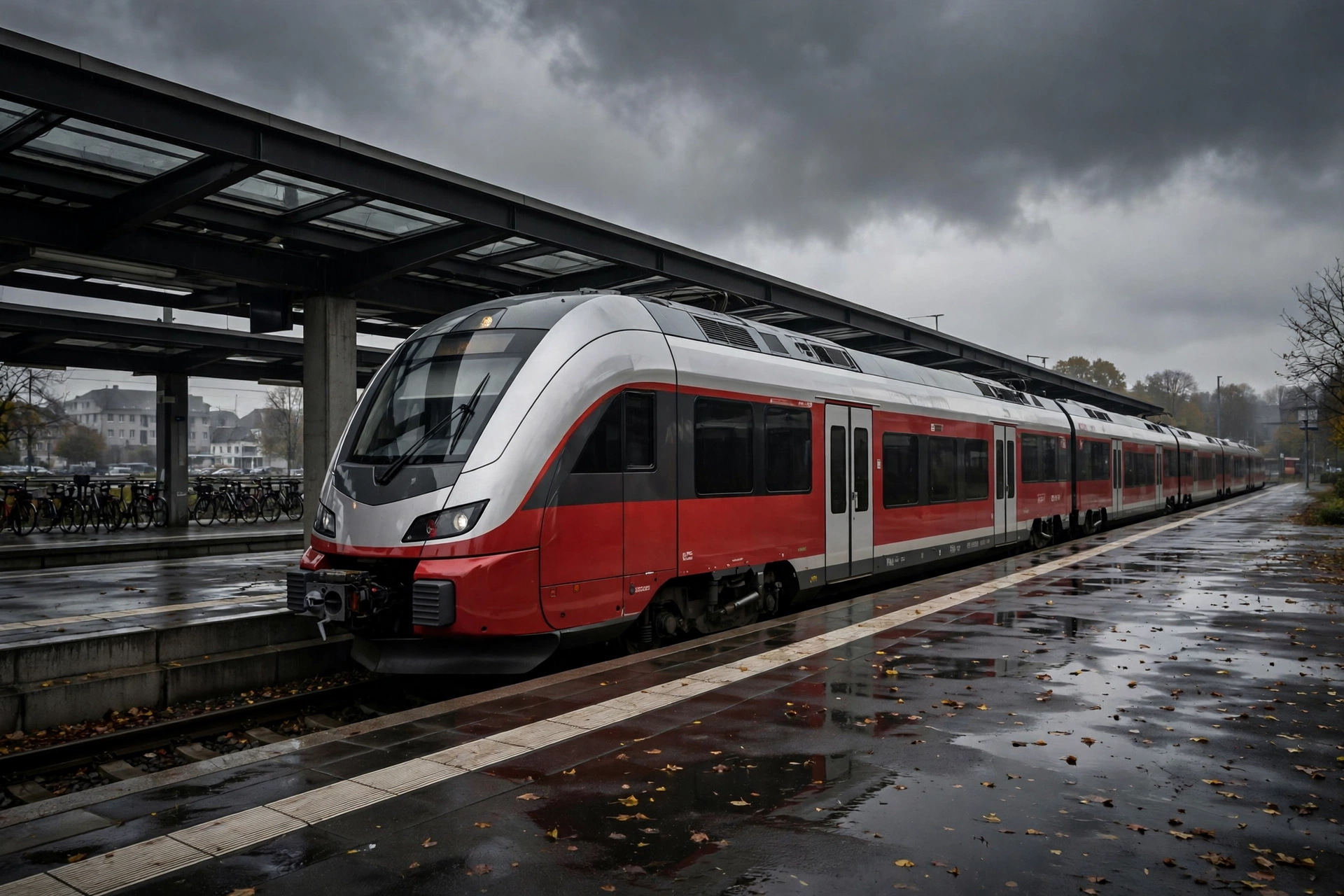
Alstom shares plunged 27% in Paris on Monday, November 2, after the French train maker cut its full-year margin forecast to around 1% from around 6.5% and said it now expects a free cash flow outflow of €1.5 billion instead of a positive result. It is the company's second outlook cut in 2026, and it was driven by execution problems on its Coradia Max regional train programme in Germany.
What happened to Alstom stock today?
Alstom tanked 27% in early trading, according to Reuters, with the pan-European STOXX 600 slipping 0.3% to 645.04 points by 0813 GMT while Alstom fell far harder than the wider market. The Wall Street Journal reported the shares trading down 29% at €11.18, leaving the stock more than 50% lower for 2026 as a whole. Reuters noted the shares hit a March 2024 low during the sell-off.
The drop came after Alstom published preliminary first-half results for its 2026/27 financial year on the morning of November 2, following a board meeting on November 1. The numbers themselves were not the main shock — the guidance cut that came with them was.
What did Alstom actually cut?
The new forecasts, confirmed in Alstom's own release, are stark:
- Adjusted EBIT margin: around 1% for the full year, down from around 6.5% previously. That implies a margin of around 6.5% in the second half just to reach the lowered target.
- Free cash flow: an outflow of €1.5 billion (about $1.7 billion), compared with a previous forecast of a positive result.
- Production: around 4,000 rail cars this year, down from a previous range of 4,400 to 4,500.
- Sales growth: low- to mid-single-digit organic growth, down from around 5% previously.
- Debt: a new deleveraging objective of around €2 billion.
Citi estimated the €1.5 billion outflow at roughly 20% of Alstom's market capitalisation — one reason investors reacted so sharply.
Why is this blowing up?
First, the size of the swing. A margin forecast falling from about 6.5% to about 1% in one update is not a tweak — it is a reset. In the first half alone, Alstom's adjusted EBIT margin was around minus 4%, compared with plus 6.4% a year earlier, even though sales rose 3% to €9.3 billion and order intake reached €11.0 billion, for a book-to-bill ratio of 1.2. In other words, demand did not collapse; execution did.
Second, this is the second time in 2026. Reuters reported the warning came less than seven months after Alstom scrapped a three-year free cash flow target and cut its margin outlook in April, also blaming execution issues. It is the second downgrade since Martin Sion became chief executive in April — raising the question of whether the problem is now fully disclosed.
Third, the cash story flipped. After a first-half outflow of €1,248 million, Alstom said milestone payments are shifting into later years because projects are entering service later than expected.
What went wrong with Coradia Max?
The setback centred on Coradia Max, a series of high-capacity regional trains ordered by German states that was expected to drive production growth this year. Alstom said technical issues and additional testing requirements extended the certification — or homologation — timeline for the trains, delaying deliveries and weighing on profitability. XTB reported that development work was temporarily paused for additional testing, that deliveries across six contracts would be delayed, and that contractual penalties would follow.
A delayed certification also moves the milestone payments attached to a delivery, leaves factories below plan — hence the cut to around 4,000 cars — and can trigger penalties. Alstom said its project-level risk review should finish by year-end, with performance expected to normalise from 2027/28 towards an 8-10% margin over the medium term.
How did the rest of the European market react?
Healthcare stocks eased 1% and energy stocks lost 1% as Brent crude fell about 3%. Airlines rose on cheaper fuel — Lufthansa gained 1.6% and Air France 2% — while chip stocks Aixtron and Infineon recovered 2.4% and 1%.
What's next?
Alstom publishes full half-year results on November 17, 2026, when investors will look for detail on the €2 billion deleveraging plan, any German contract penalties, and whether the implied second-half margin of around 6.5% is credible after a first half at minus 4%. Orders are still coming in — turning them into delivered, certified trains on schedule is where Alstom stumbled. This article reports what happened; it is not a recommendation to buy, sell or hold any security.
Sources
- Reuters — European shares slip as investors weigh Middle East talks; Alstom tanks
- Reuters — Alstom slashes annual margin target, sees €1.5 billion cash burn
- Alstom — Preliminary first half 2026/27 results
- The Wall Street Journal — Alstom shares plunge after technical issues prompt guidance cut
- Euronext / Reuters — Alstom plunges as it slashes outlook second time in 2026
FAQ
Why did Alstom stock fall 27% today?
Alstom cut its full-year margin forecast to around 1% from around 6.5% and switched its free cash flow forecast to a €1.5 billion outflow, after execution problems on its Coradia Max trains in Germany hit first-half profitability.
What is Coradia Max and what went wrong?
Coradia Max is Alstom's high-capacity regional train platform ordered by German states. Technical issues and extra testing extended its certification timeline, delaying deliveries, milestone payments and production.
Is this Alstom's first outlook cut in 2026?
No. It is the second cut in 2026, less than seven months after Alstom scrapped a three-year free cash flow target and cut its margin outlook in April.
When will Alstom report full results?
Alstom is scheduled to publish its full half-year 2026/27 results on November 17, 2026, including more detail on its roughly €2 billion deleveraging objective.