 Forward Future
Caterpillar Stock Falls 10% After a Beat That Wasn't Enough
2026-10-29
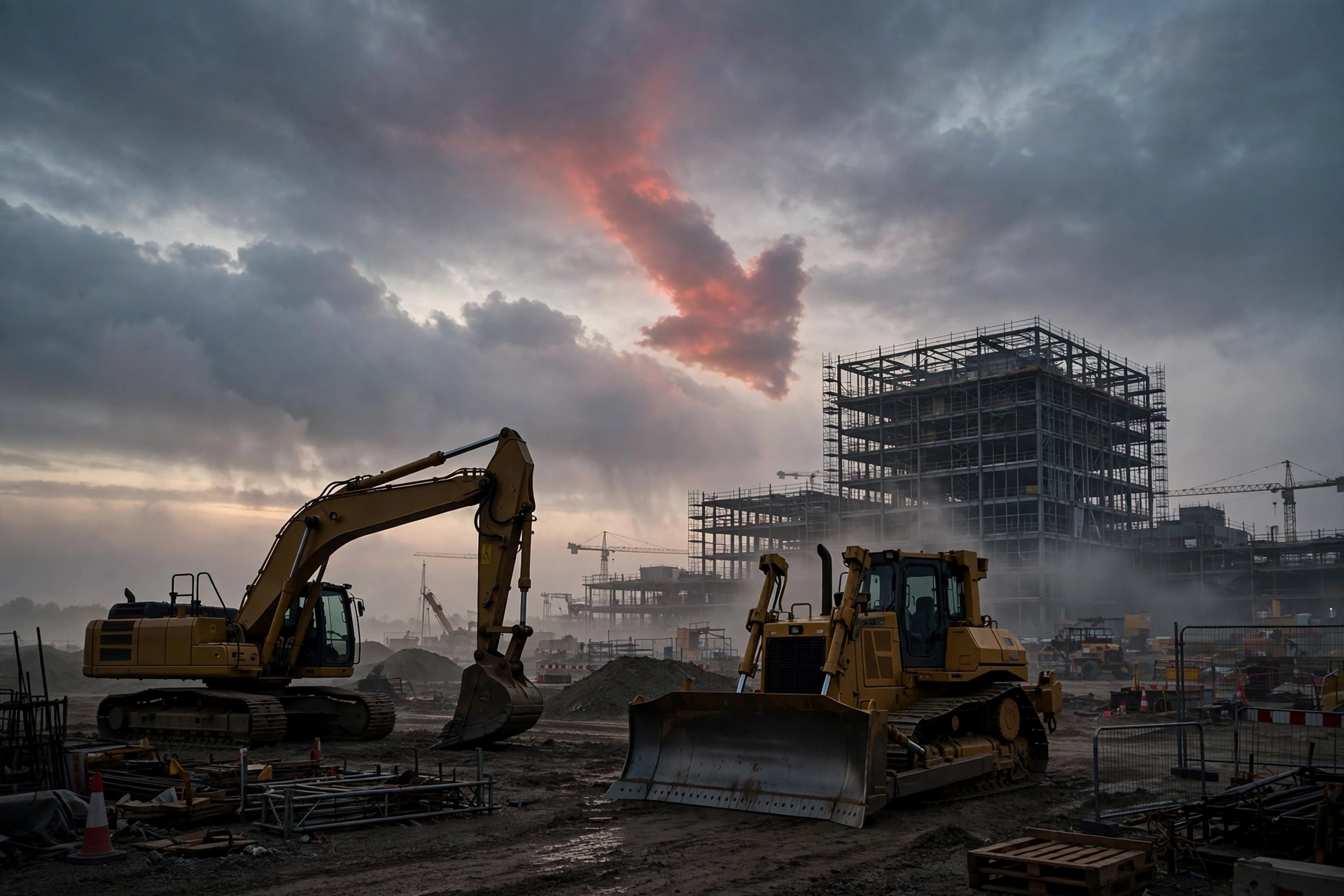
Caterpillar (CAT) stock fell about 9% to 10% on Thursday, October 29, 2026, even though the heavy-machinery maker beat Wall Street's third-quarter earnings estimates — because it only maintained its full-year sales outlook instead of raising it, ending a beat-and-raise streak investors had come to expect.
What happened
Caterpillar reported third-quarter results before the open on Thursday that topped estimates on both profit and revenue. Adjusted earnings came in at $7.20 per share, ahead of the $7.08 analysts expected, according to LSEG data reported by Reuters, while revenue rose 17% year over year to $20.7 billion, beating a $20.55 billion forecast. A year earlier, Caterpillar earned $4.95 per share on $17.6 billion in sales, so profit grew roughly 45% from the same quarter last year.
Adjusted operating profit margin widened to about 20.6%, roughly three percentage points better than a year ago, and the company's order backlog swelled to a record $78.1 billion, up $6 billion from the previous quarter. The power and energy segment — the business selling the generators and backup-power equipment that data centers depend on — grew sales 18% to about $8.9 billion, with power generation sales up around 30% as the AI data-center buildout kept rolling.
Why the stock is falling anyway
The problem was not what Caterpillar did in the third quarter. It was what the company did not do for the fourth. Caterpillar maintained its full-year outlook, still expecting 2026 revenue growth in the mid-to-high teens, unchanged from last quarter. Analysts had been looking for growth closer to the high teens, around 18%, and for a company that raised guidance after both its first- and second-quarter reports, standing still read as a disappointment.
Bernstein analyst Chad Dillard put it bluntly, writing that the "beat and raise streak ends." Jefferies analyst Stephen Volkmann noted segment results were "nearly dead in line" with expectations, and Oppenheimer's Kristen Owen said the quality of the beat gives investors "a chink in the CAT armor" despite broad-based growth. The beat itself was also thinner than last quarter's, and it included a $128 million benefit from refunds of tariffs imposed under the International Emergency Economic Powers Act, which were deemed unconstitutional earlier in 2026. Caterpillar kept its full-year tariff cost forecast of about $2.2 billion unchanged.
Why it's blowing up
Caterpillar is no longer just a bulldozers-and-mining-trucks stock. Its power division has made it a proxy for the entire AI infrastructure trade: every new data center needs construction equipment to build it and Caterpillar generators to keep it running when the grid fails. That is why Thursday's reaction was so sharp. The selloff landed on the same morning that Alphabet's earnings had already revived Wall Street's anxiety about debt-fueled AI spending, dragging Nasdaq futures down more than 1%. When investors are questioning how long the data-center boom can last, a company at the center of that boom declining to raise its outlook gets punished far more than the headline numbers seem to deserve.
Context matters as well. Caterpillar shares had already fallen more than 20% since August, and over a fifth since its second-quarter results, as investors grew more cautious about the AI boom and more demanding about proof that massive data-center spending will generate sufficient returns. Thursday's drop extends that slide and makes Caterpillar one of the day's biggest decliners among large US stocks, alongside other AI-linked names caught in the morning's risk-off mood.
What's next
The next test is whether the record $78.1 billion backlog converts into the growth investors were promised. Backlog growth this quarter was slower than earlier this year, so bulls and bears will both be watching order momentum, data-center demand, and any sign that opposition to new data centers or a slowdown in AI capital spending starts to bite. Caterpillar's fourth-quarter report will also show whether management's caution was conservatism or an early warning. For now, the takeaway is simple: in a market priced for perfection on anything AI-adjacent, a beat without a raise is treated like a miss. This article reports what happened and why markets reacted; it is not investment advice.
Frequently asked questions
Why did Caterpillar stock fall about 10% today?
Shares fell roughly 9% to 10% on Thursday, October 29, 2026, because Caterpillar maintained — rather than raised — its full-year sales growth outlook after beating third-quarter estimates, ending its beat-and-raise streak.
What were Caterpillar's Q3 2026 earnings?
Caterpillar reported adjusted earnings of $7.20 per share, versus $7.08 expected, on revenue of $20.7 billion, up 17% year over year and ahead of the $20.55 billion forecast.
What is Caterpillar's full-year 2026 outlook?
The company kept its outlook unchanged, expecting full-year revenue growth in the mid-to-high teens, with an annual tariff cost forecast of about $2.2 billion.
Why is Caterpillar considered an AI stock?
Its power and energy segment sells generators and backup-power equipment for data centers, and AI-driven data-center construction has become a major source of demand, with segment sales up 18% and power generation sales up about 30%.
Sources
- Reuters via KSEV — Caterpillar tops quarterly profit view, but shares sink after unchanged annual growth forecast
- Barron's — Caterpillar's Strong Earnings Fail to Calm Wall Street's Nerves
- Barchart — Caterpillar Drops 10% Pre-Market Despite Q3 Beat and AI Build-Out Growth
- Reuters via WIXX — Caterpillar tops quarterly profit estimates, maintains annual growth forecast