 Forward Future
China's Factories Shrink Again: PMI Falls to 49.3 in October
2026-10-31
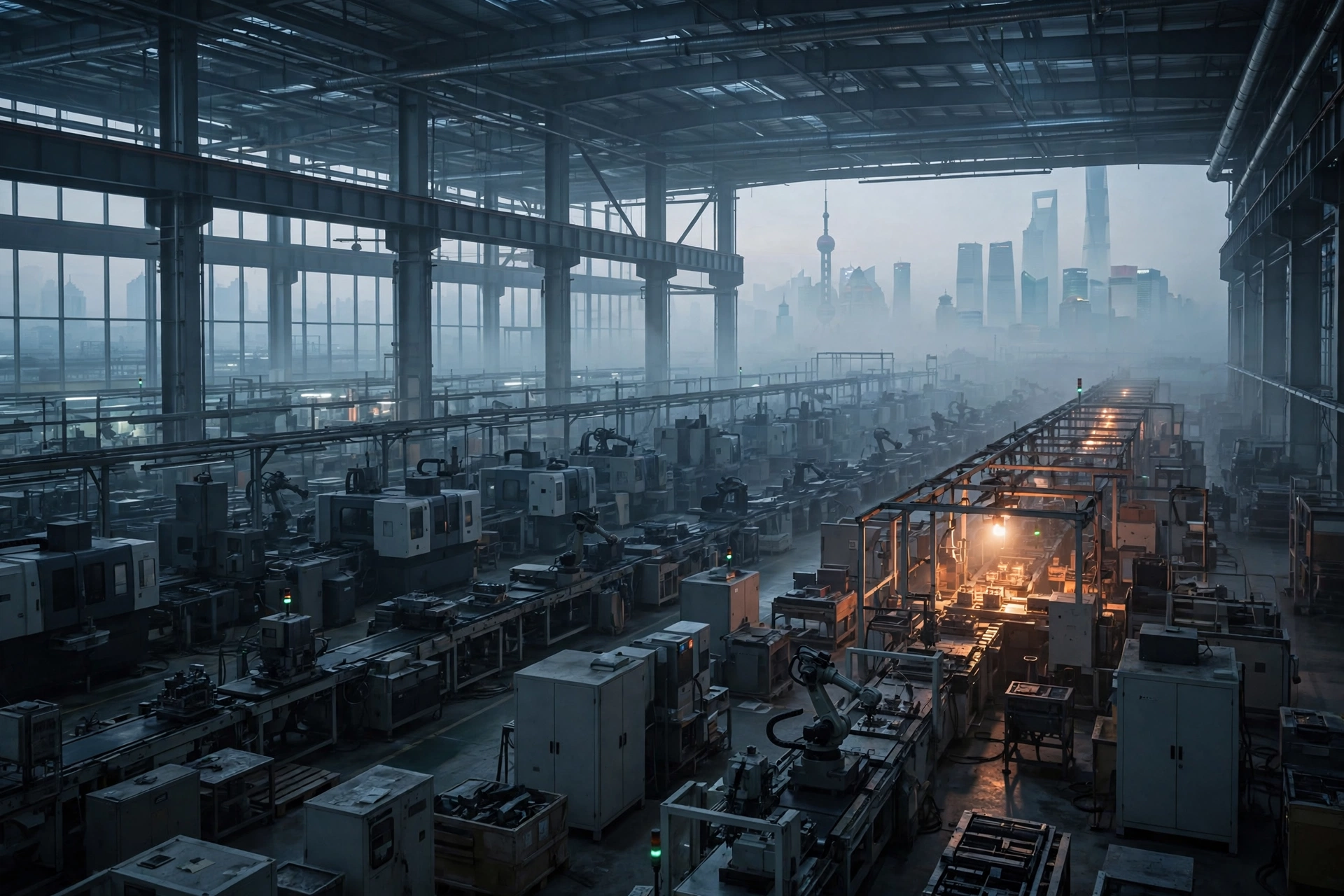
China's factory activity contracted in October, with the official manufacturing PMI falling to 49.3 from 50.1 in September — below the 50 line that separates expansion from contraction, and below the 50.0 forecast in a Reuters poll. The data, released Saturday, October 31 by China's National Bureau of Statistics (NBS), marks the third contraction in four months for the world's second-largest economy, and services and construction weakened alongside it.
What happened?
The NBS survey showed weakness on both the supply and demand sides of Chinese manufacturing. The production sub-index dropped to 49.8 from 51.7 in September, while the new orders index fell to 49.4 from 50.5, according to Business Today reporting on the official release. Sub-indexes for new orders overall and for new export orders both stayed in contraction territory, and purchasing activity slipped from expansion into contraction as well, Reuters reported.
The slowdown was not limited to factories. The non-manufacturing PMI, which covers services and construction, fell to 49.7 from 50.2 in September. Construction activity dropped sharply to 48.0 from 50.3, while the services index eased to 50.0 from 50.2. The composite PMI output index, combining both sides of the economy, declined to 49.7 from 50.7 — meaning all three headline gauges sat below 50 in October.
Why is this blowing up?
The reading landed on a Saturday morning when Asian markets were closed, which makes it the first major data point investors will price in when trading resumes on Monday. China is the world's largest manufacturer and a central buyer of commodities, components and consumer goods, so a synchronized dip in factory output, new orders and construction tends to ripple into expectations for exporters across Asia and Europe, industrial metal prices, and the earnings outlook for global companies that sell into China.
The miss also matters because September had briefly raised hopes of stabilization: the manufacturing index had climbed back above 50 to 50.1. October's drop of 0.8 points erased that signal and confirmed the pattern of the past four months — brief expansions followed by renewed contraction — rather than a clean recovery. Analysts noted that part of the weakness reflects timing: overseas Christmas-related orders were front-loaded into September and cooled in October, and demand was pulled forward ahead of China's National Day holiday in early October, according to Reuters and the NBS. Even allowing for that, domestic demand for goods at home was soft, and factory employment stayed in contraction at 48.4, unchanged from September.
Key facts
- Manufacturing PMI: 49.3 in October, down from 50.1 in September and below the 50.0 Reuters poll forecast — the third contraction in four months.
- Non-manufacturing PMI: 49.7, down from 50.2, with construction at 48.0 and services at 50.0.
- Composite PMI: 49.7, down from 50.7 in September.
- Production and orders: production fell to 49.8 from 51.7; new orders fell to 49.4 from 50.5; factory employment held at 48.4.
- Size split: large manufacturers stayed just in expansion at 50.2, while medium-sized firms recorded 48.4 and small firms 47.5.
- Bright spots: high-technology manufacturing (51.3) and equipment manufacturing (50.6) kept expanding, and production and new orders in railway, shipbuilding, aerospace and electronics manufacturing were at or above 53.0.
That split is the detail detailed coverage keeps returning to: the downturn is broad but not uniform. Zhang Liqun, an analyst with the China Federation of Logistics and Purchasing, described demand as the central concern and called for faster support, including expanded public investment, Asia Daily reported. Consumer goods manufacturing was among the weakest areas, with its PMI at 48.8 and its new orders index falling by more than three points.
What's next / takeaway
The immediate question for Monday's Asian session is whether investors treat October as holiday distortion — the NBS itself pointed to demand being brought forward before the National Day break — or as evidence that China's factory sector needs more policy support heading into year-end. The first month of a quarter is also typically the weakest, Reuters noted, which tempers the alarm. Watch for any official response on stimulus, the next trade figures for signs that export demand is genuinely cooling after September's front-loading, and whether high-technology and equipment manufacturing can keep expanding while smaller and consumer-facing factories contract. For now, the verified picture is simple: China's factories shrank again in October, orders fell with them, and the brief September expansion did not hold.
FAQ
What was China's manufacturing PMI in October 2026?
It was 49.3, down from 50.1 in September, according to the National Bureau of Statistics. Below 50 means factory activity contracted.
Why did China's factory activity fall in October?
New orders and production weakened at home and abroad: Christmas-related export orders had been front-loaded into September, demand was pulled forward before the National Day holiday, and domestic demand stayed soft.
Did services and construction also weaken?
Yes. The non-manufacturing PMI fell to 49.7 from 50.2, construction dropped to 48.0, and the composite index fell to 49.7.
Why do markets care about China's PMI?
China is the world's largest manufacturer, so its factory orders shape expectations for Asian and European exporters, commodity demand and global earnings — and this release is the first data point priced in when markets reopen Monday.