 Forward Future
Election Night Shock: Nasdaq Futures Sink 2% as Democrats Projected to Sweep Congress
2026-11-03
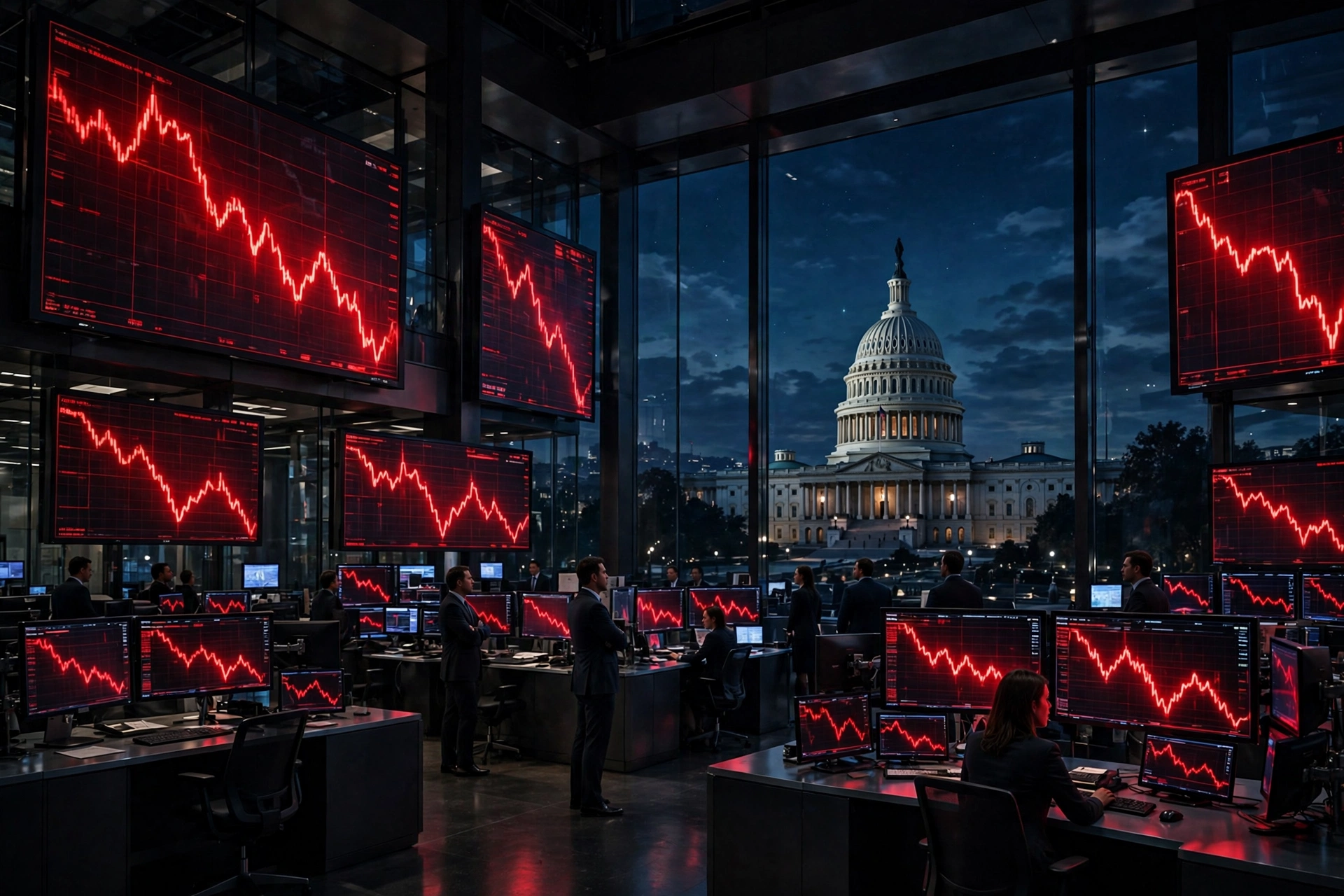
U.S. stock futures fell sharply on election night, Tuesday, November 3, 2026, with Nasdaq-100 futures down about 2% and S&P 500 futures down about 1% as projections pointed to Democrats taking the House and possibly the Senate. The selloff erased an early futures gain and hit technology shares hardest, as traders priced in tighter oversight of the artificial intelligence and data-center buildout under a Democratic Congress.
What happened on election night?
The regular session had closed on a calm, mixed note. The S&P 500 rose 0.36% to 7,569 and the Nasdaq Composite gained 0.83% to 25,372 as semiconductor stocks rebounded, while the Dow Jones Industrial Average slipped 0.38% to 51,787. Futures opened the evening modestly higher — the S&P 500 contract was up about 0.5% at one point — but the tone flipped as polls closed and early counts came in stronger for Democrats than many traders had positioned for.
By around 9:46 p.m. ET, Dow futures were down 0.76%, S&P 500 futures were down 1.13%, and Nasdaq-100 futures had fallen nearly 2%. The 10-year Treasury yield dropped to about 4.90% as investors moved into bonds, and the VIX volatility gauge rose back above 20.
Why are futures falling?
The trigger was political, not economic. Decision Desk HQ projected that Democrats will take the House of Representatives, and CNBC's election desk projected a Democratic House win with the party also poised to contend for the Senate. Prediction markets moved even faster: Polymarket put Democratic control of both chambers above 99% late in the evening, while Kalshi gave Democrats roughly 97–98% odds of winning the House and about 90% for the Senate. Those are market odds and projections, not certified results, and counting is still under way.
The sector pattern tells the story. The Nasdaq fell roughly twice as hard as the broader market because investors fear a Democratic Congress would tighten rules on AI and data centers — the spending boom that has carried technology stocks this year. JPMorgan had warned ahead of the vote that a Democratic sweep could spark a sell-off in AI stocks, and Ameriprise chief market strategist Anthony Saglimbene told Reuters that Democratic control of both chambers could put pressure on technology shares. Tesla and SpaceX were each down nearly 2% in postmarket trading on concerns about tighter oversight of AI and data-center expansion.
Key facts
- Nasdaq-100 futures: down about 2% at the evening low, after starting the session higher.
- S&P 500 futures: down about 1%, erasing an early gain of roughly 0.5%; one widely followed market account estimated the index shed about $500 billion in market value in roughly two hours.
- Dow futures: down about 0.8%, or roughly 367 points at the late-evening low reported by CNBC.
- Bonds and volatility: the 10-year Treasury yield fell to about 4.90% and the VIX rose above 20.
- Early race calls: Democratic senators Jon Ossoff of Georgia and Mark Warner of Virginia won re-election, according to Reuters, and NBC projected Democrat Roy Cooper would flip North Carolina's Senate seat.
- What is not decided: neither chamber was fully called late Tuesday; projections can still be wrong.
Why it's blowing up
Election-night futures moves are dramatic because they happen in thin overnight trading, when modest selling can move prices a long way. This one also landed on a market already nervous about the AI trade: the Nasdaq-100 had only just snapped a three-day losing streak during Tuesday's session. The speed of the reversal made it the dominant market story of the night.
What's next
Wednesday's cash open is the real test. If final results confirm a Democratic sweep, traders will watch whether the overnight losses hold or fade once full liquidity returns. If the Senate splits or stays uncalled, some of the move could reverse just as quickly. The sectors in the crosshairs are clear: AI infrastructure, data centers, and the big technology names that depend on them. This report describes what happened and why traders reacted; it is not a recommendation to buy, sell, or hold any security.
Sources
- Reuters — U.S. stock futures dip as investors await midterm election results
- Barron's — Stock Futures Drop as Democrats Post Strong Early Numbers
- Stocktwits — Dow, S&P 500, Nasdaq Futures Fall as Markets Weigh a Potential Democratic Sweep
- InvestingLive — US futures slide as Democrats lead midterm count, AI data centre fears hit tech
- The Motley Fool — Stock Market Today, Nov. 3: Markets Edge Higher as Semiconductor Stocks Rebound
FAQ
Why did Nasdaq futures fall 2% on election night?
Early results and projections pointed to Democrats taking the House and possibly the Senate, and traders sold technology shares on fears of tighter regulation and oversight of AI and data centers under a Democratic Congress.
Have Democrats officially won Congress?
Not as of late Tuesday night. Decision desks projected a Democratic House win and prediction markets priced a sweep as highly likely, but counting continues and projections are not certified results.
How did the regular trading session close on November 3?
The S&P 500 rose 0.36% to 7,569 and the Nasdaq Composite gained 0.83% to 25,372 on a semiconductor rebound, while the Dow slipped 0.38% to 51,787.
Will the overnight losses hold when markets open Wednesday?
That is not yet known. Overnight futures trade on thin volume and often overstate the next day's move; the full cash session will show whether investors treat the result as a lasting policy shift or a one-night shock.