 Forward Future
European Gas Tops 100 Euros for First Time Since 2022 as Winter Looms
2026-10-30
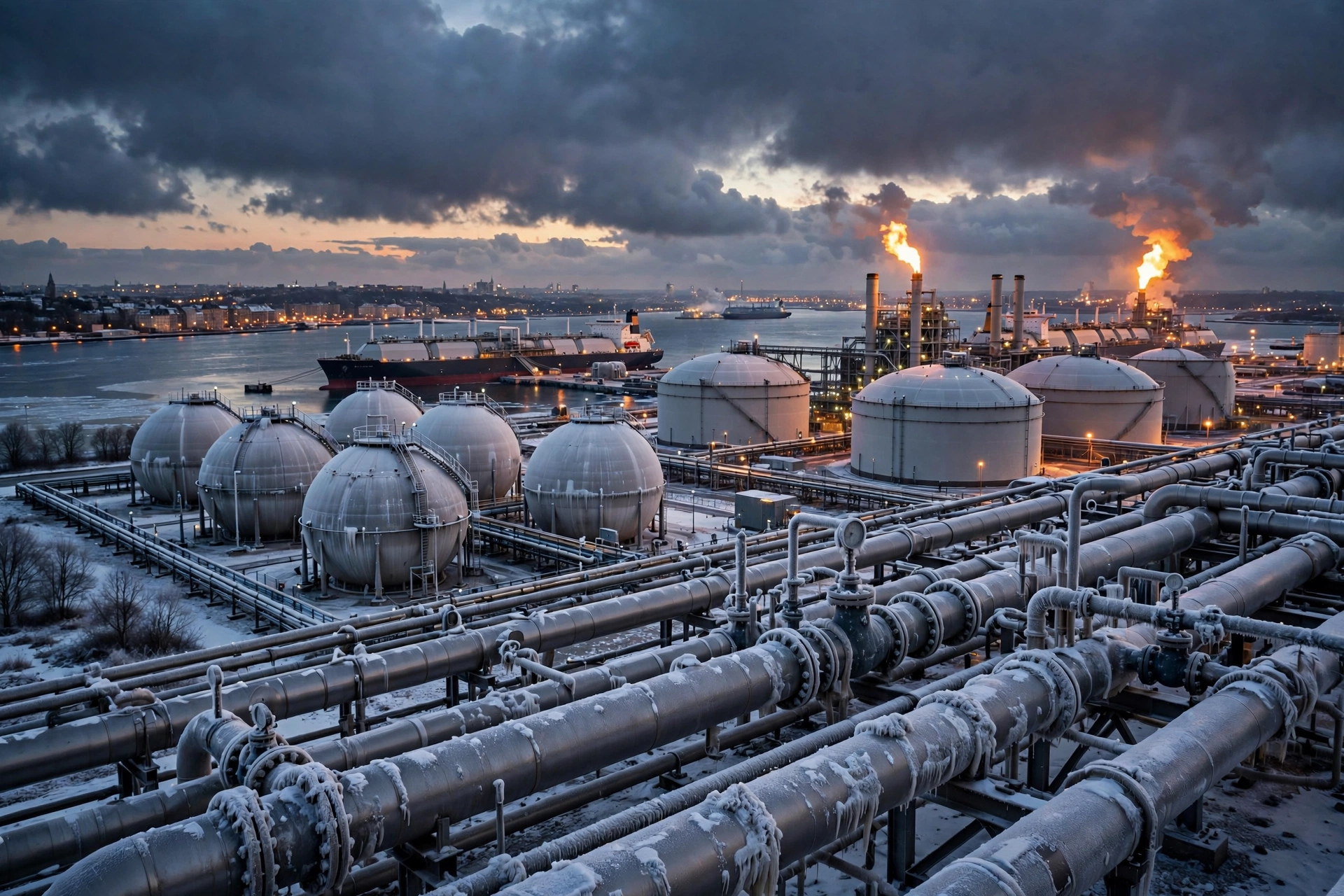
European natural gas prices topped 100 euros per megawatt-hour on Friday, October 30, 2026, for the first time since the 2022 energy crisis, as low storage, disrupted liquefied natural gas (LNG) supplies and the start of the heating season collided. The front-month Dutch Title Transfer Facility (TTF) price, Europe's benchmark, reached 101.82 euros (about $114) per megawatt-hour early on Friday, up about 4% on the day and on track for a weekly gain of about 8%.
What happened?
The benchmark first touched 100 euros briefly on Wednesday, October 28, its first time at that level since December 2022, after trading near 28 euros in early January. December-delivery TTF futures were seen even higher on Friday, up 4.9% at 102.78 euros per megawatt-hour. That leaves the contract up about 36% for October and about 256% for the year, according to Trading Economics data reported by CNBC.
For context, prices were last here during the 2022 crisis after Russia's invasion of Ukraine, when Moscow cut pipeline gas to Europe. TTF peaked far higher then — about 339 euros in August 2022 — but the speed of this year's climb is what has markets on edge.
Why is it blowing up?
Storage is historically low. EU gas storage sites were only 74.89% full as of October 29, according to Gas Infrastructure Europe data — well below the five-year average of about 86% for this time of year and below the 83% recorded a year earlier. By one measure, inventories are at their lowest seasonal level since records began in 2011, and withdrawals have already started in a number of countries as temperatures fall.
Gulf LNG is disrupted. Middle East escalation is choking off Qatari and Emirati LNG flows through the Strait of Hormuz, and QatarEnergy this week extended its force majeure on LNG deliveries to year-end, leaving Europe and Asia without certain term supply. Unplanned outages in Norway add to the squeeze, ING's Warren Patterson noted, with little sign of relief in Gulf flows.
Winter demand is arriving. Forecasts point to colder weather in northwest Europe from early November, lifting heating demand. Macquarie's Peter Taylor put it bluntly: Europe effectively needs a warm winter to get through unscathed, and a cold snap could force it to compete with Asia for cargoes.
Key facts
- Price: TTF front-month 101.82 euros per megawatt-hour early Friday; December futures 102.78 euros, up 4.9%.
- Milestone: First trade above 100 euros since 2022; the contract traded near 28 euros in early January.
- Storage: EU sites 74.89% full on October 29, versus a five-year average of about 86%.
- Supply: QatarEnergy force majeure on LNG deliveries extended to the end of the year; Hormuz flows disrupted; Norway outages adding pressure.
- Oil too: Brent crude rose above $112 a barrel in the same session, and UBS raised its end-2026 Brent forecast to $110 from $100.
Why it matters beyond the gas market
Gas provides about one-sixth of the EU's power generation, so wholesale prices feed into electricity prices, factory costs and household bills. BlackRock estimated on October 27 that the energy shock has already cut about 0.5% from European GDP, versus about 0.1% in the United States. Fertiliser maker Yara has already cut ammonia production in Europe because of high energy costs.
The surge also complicates life for the European Central Bank, which held rates on Thursday. President Christine Lagarde warned the full effects of the energy shock have not yet shown up in the economy. EU energy ministers, meeting in Luxembourg on Thursday, reaffirmed plans to speed up releasing 42.6 million barrels of oil from strategic stocks, while stressing supply security itself is not yet at risk — the burden, for now, is prices.
What's next?
The next weeks hinge on the weather and the Strait of Hormuz. A mild November would slow storage withdrawals and could pull prices back. A cold snap or a longer LNG outage would do the opposite — and analysts cited by Reuters expect high prices to persist into next year while Europe rebuilds storage. This report describes what happened and why markets reacted; it is not a recommendation to buy, sell or hold anything.
Sources
OilPrice.com — European Gas Tops 101 Euros for First Time Since 2022
Pollar News — Gas above 100 euros per megawatt-hour and Brent at $112 amid Iran tensions
Europe Says / CNBC — A cold winter risks new gas price shock for Europe
FAQ
Why did European gas prices top 100 euros?
Prices jumped because EU storage is historically low at 74.89% full, LNG supplies from the Gulf are disrupted through the Strait of Hormuz, QatarEnergy extended its delivery force majeure to year-end, and colder winter weather is lifting heating demand.
When were European gas prices last this high?
The benchmark last traded above 100 euros per megawatt-hour in 2022, during the energy crisis after Russia's invasion of Ukraine, when TTF peaked at about 339 euros in August 2022.
What is the TTF?
The Title Transfer Facility is a Dutch trading hub whose price is the benchmark for natural gas across Europe. Its front-month and December futures are the contracts traders watch most closely.
Will household energy bills rise?
Wholesale prices feed into retail bills with a lag, so households may feel more impact in 2027 if prices stay high. EU governments are releasing strategic oil stocks to calm markets.