 Forward Future
Fed Holds Rates at 3.75% to 4% — But Two Voters Wanted a Hike
2026-10-28
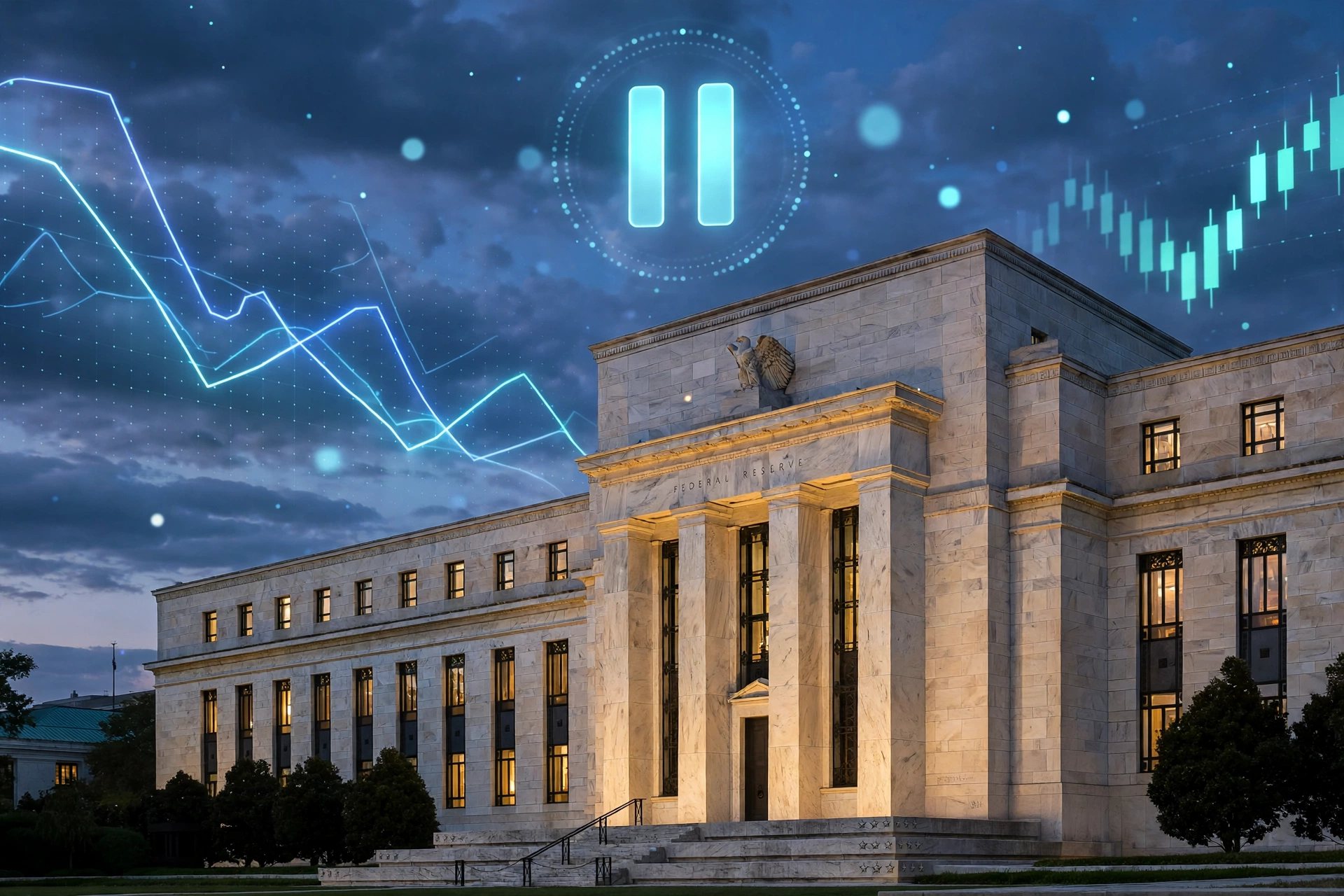
The Federal Reserve held its benchmark rate at 3.75% to 4% on Wednesday, October 28, 2026, in a 10-2 vote. Governor Lisa Cook and Cleveland Fed President Beth Hammack dissented, preferring another quarter-point hike. The decision was the Fed's final meeting before the midterms, and it leaves September's hike — the first in three years — in place while policymakers wait for more information on inflation.
What happened at the Fed meeting?
The Federal Open Market Committee announced the hold at 2:00 p.m. ET. In its statement, the Fed said: “The accumulation of more information will help the Committee determine the policy stance appropriate to ensure a timely return of inflation to the Committee’s 2 percent goal.” It also said inflation remains elevated and that economic activity is expanding at a strong pace, with resilient domestic spending, strong productivity growth and robust capital investment.
The vote split is the story inside the hold. Ten of the 12 voting members backed leaving the range unchanged. Cook and Hammack wanted a hike now. That split shows a committee that agrees inflation is too high, but disagrees on timing — act again immediately, or assess September's move first.
Markets had largely priced this outcome. Before the decision, CME FedWatch put the chance of no change at about 91%, according to USA Today, with roughly 90.6% of traders betting on a pause the day before. The surprise, if any, was not the hold itself but how clearly the statement kept a December hike on the table.
Why is this blowing up right now?
This was not a quiet hold. Stocks held near the flat line after the announcement, while benchmark Treasury yields inched higher. The Wall Street Journal reported the 10-year yield rising to about 5.04%, with the Dow and S&P 500 up about 0.1% and the Nasdaq slightly lower after rallying almost 2% over the previous two days. CoinDesk reported the 10-year yield up about four basis points to 5.025% and Bitcoin rising modestly to around $81,000 in the minutes after the decision.
Traders are now focused on two things at once: Chair Kevin Warsh's press conference at 2:30 p.m. ET, and earnings from Alphabet and Microsoft after the close. Either could move markets more than the hold itself — Warsh on whether December is a hike, and the hyperscalers on whether heavy AI spending is producing returns.
Key facts investors need to know
- Rate: Federal funds target range unchanged at 3.75% to 4%, where it has stood since September's quarter-point hike.
- Vote: 10-2 to hold. Lisa Cook and Beth Hammack dissented in favour of a quarter-point hike.
- Inflation: Consumer prices rose 3.7% over the year in September, well above the Fed's 2% target; PCE inflation was 3.4% over the year in August.
- Jobs: Employers added 29,000 jobs in September and unemployment ticked up to 4.2% from 4.1% in August, in what USA Today described as a low-hire, low-fire market.
- Next meeting: December 9-10, the Fed's final meeting of 2026. Forecasters widely expect a quarter-point increase then.
Sources: USA Today, The Wall Street Journal, CoinDesk.
What does a hold mean for borrowers and savers?
A hold does not undo September's hike. Borrowing costs are not guided higher today, but they are not coming down either. Variable credit-card rates tend to follow the federal funds rate with a lag of one to two billing cycles, so September's increase may still be working through statements. Mortgage rates do not move directly with the Fed — the average 30-year fixed rate was 7.39% in Bankrate data cited by USA Today, tracking the 10-year Treasury near 5% — but a hawkish tone from Warsh could put upward pressure on them.
For savers, the picture is similar: high-yield accounts offering around 4% can still outpace a national average savings rate of 0.38%, a gap that matters when inflation is running at 3.7%, above wage growth of 3%.
What's next?
The next decision point is December 9-10. Before that, investors will parse Warsh's press conference for any signal that the two dissents reflect a broader shift, watch upcoming PCE and GDP data due October 29, and weigh the November 3 midterm results and developments in the war in Iran — cited as a major driver of this year's inflation — for their effect on energy prices and the Fed's timeline. This post reports what happened and how markets reacted; it is not a recommendation to buy, sell or hold any security.
FAQ
What did the Fed decide on October 28, 2026?
The Fed held its benchmark rate at 3.75% to 4% in a 10-2 vote, leaving September's quarter-point hike in place while it gathers more information on inflation.
Who dissented and why?
Governor Lisa Cook and Cleveland Fed President Beth Hammack dissented, preferring another quarter-point hike this month, as inflation remains well above the 2% target.
When is the next Fed meeting?
The Fed's final meeting of 2026 is December 9-10, and forecasters widely expect a quarter-point increase at that meeting, though nothing is confirmed.
How did markets react to the hold?
Stocks held near the flat line, the 10-year Treasury yield inched higher to about 5.04%, and Bitcoin rose modestly, as traders turned to Warsh's press conference and Alphabet and Microsoft earnings.