 Forward Future
Firefly Stock Soars 27% on $1.3B AST Rocket Deal
2026-11-06
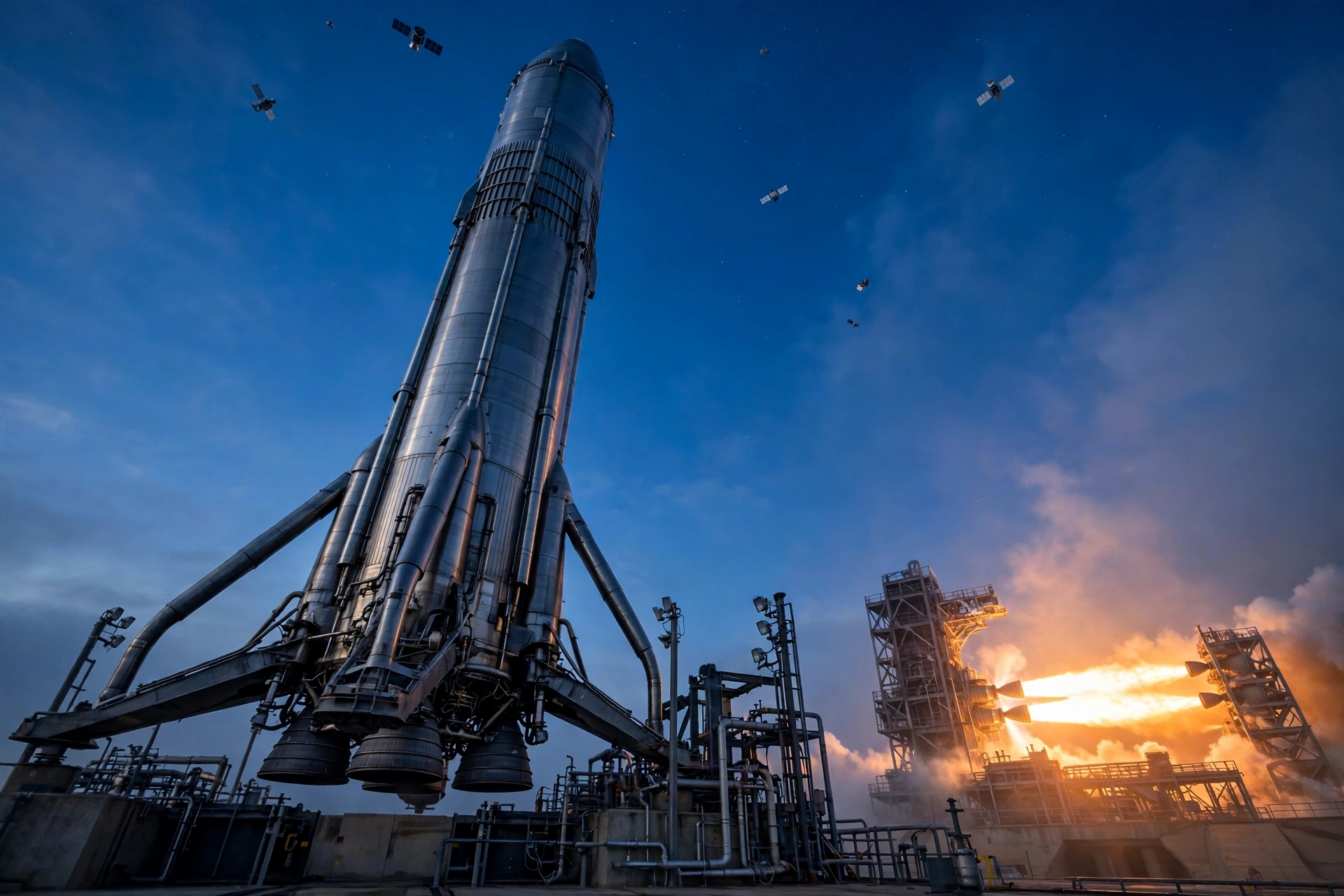
Firefly Aerospace (NASDAQ: FLY) stock soared about 27% on Friday, November 6, 2026, after the company announced a deal worth more than $1.3 billion to supply rocket engines to AST SpaceMobile (NASDAQ: ASTS). AST SpaceMobile said it will build its own reusable heavy-lift rocket, called Blacklift, powered by Firefly's Miranda and Vira engines, in a move designed to end its dependence on third-party launch providers.
What happened
Firefly and AST SpaceMobile announced the agreement before the market opened on Friday. Firefly will deliver 36 rocket engines for AST's first three Blacklift rockets — 27 Miranda engines and nine Vira engines, the vacuum-optimized variant — and will license AST to manufacture the engines itself. Firefly will also provide engineering support over three years.
The market reaction was immediate. Firefly shares rose 27.22% to $19.31 by 12:54 p.m. ET, according to The Motley Fool, recovering sharply from a $15.18 close on November 5, a session in which the stock had touched a 52-week low of $14.44. AST SpaceMobile shares also rose, up about 4-6% in reports through the session. CNBC's midday movers coverage, via Traders Union, described Firefly as jumping nearly 30% intraday.
How the $1.3 billion deal is structured
The agreement has three parts. First, a perpetual engine license worth about $800 million upfront, structured as $400 million in cash plus 10 million to 14 million shares of AST Class A common stock, with lock-up periods on the shares. Second, $250 million for the engines for the first three rockets. Third, $250 million for engineering services over three years. Firefly retains ownership of the engine intellectual property and says it will keep supplying its existing government and commercial customers.
Scale is why investors reacted so strongly. The deal is worth more than twice Firefly's $563.7 million backlog at June 30, 2026, and roughly half of its approximately $2.5 billion market value before the news, according to deal coverage. For a company that had just hit a 52-week low, a funded order of that size materially changes the near-term revenue picture — though how much arrives as cash, and when, remains a key question because a large share of the license payment is in AST stock.
What Blacklift is — and why AST wants its own rocket
AST SpaceMobile is building a cellular broadband network in low Earth orbit using its BlueBird satellites. Until now it has relied on other companies' rockets to get them to orbit. Blacklift changes that plan: AST describes it as a reusable, roughly 20-ton-class launch vehicle able to carry up to five BlueBird satellites on a single flight, with first use expected in late 2028.
The strategic logic is control over launch timing and cost. AST had already signaled the direction in July, when it raised $1 billion in convertible debt and cited a need to reduce dependence on third-party launch providers. Friday's announcement names the vehicle, the engine supplier, and the price. AST says it will unveil Blacklift at an event in New York City on Thursday, November 12, webcast through its investor relations site.
Firefly's Miranda engine burns liquid oxygen and RP-1 kerosene. Firefly says Miranda has completed more than 175 hot-fire tests totaling over 4,200 seconds of run time. The engine has not yet flown, which is one of the main execution risks investors will weigh against the headline deal value.
Why it's blowing up
Three things collided. First, the deal size dwarfs Firefly's existing backlog, making it one of the largest engine agreements in U.S. commercial spaceflight. Second, the stock was beaten down — down sharply this year and at a 52-week low the day before — so good news met a crowded short-term pessimism trade. Third, the story pits two smaller space companies against the industry's dominant launch provider: coverage framed Blacklift as AST's attempt to challenge SpaceX's grip on satellite launches, adding a competitive storyline beyond the contract itself.
What's next
Two dates matter immediately. Firefly holds its third-quarter earnings call on Monday, November 10, where it says it will discuss the deal — investors will be listening for the cash-versus-stock split, payment timing, and any guidance change. AST's Blacklift unveiling follows on November 12. Longer term, the deal still depends on AST designing and building its rocket and on Miranda progressing from test stands to flight, with Blacklift not expected to fly until late 2028. This article reports what happened and why markets reacted; it is not a recommendation to buy, sell, or hold any security.
Sources
The Motley Fool — Why Firefly Aerospace Stock Went to the Moon Today
Traders Union / CNBC — IonQ, Firefly and Moderna lead midday stock moves
Tech Times — AST SpaceMobile Signs $1.3B Firefly Deal to Build Own Rocket
TipRanks — Firefly Aerospace Thunders Higher on $1.3B AST SpaceMobile Rocket Deal
FAQ
Why did Firefly Aerospace stock jump on November 6, 2026?
Firefly announced a deal worth more than $1.3 billion to supply 36 rocket engines, an engine manufacturing license, and three years of engineering support to AST SpaceMobile. Shares rose about 27% to $19.31 by early afternoon.
What is Blacklift?
Blacklift is AST SpaceMobile's planned reusable heavy-lift rocket, designed to carry up to five of its BlueBird satellites to low Earth orbit per flight. AST expects to begin using it in late 2028 and will unveil it on November 12, 2026.
How will AST SpaceMobile pay Firefly?
The deal totals more than $1.3 billion: about $800 million upfront for the license ($400 million in cash plus 10-14 million AST shares), $250 million for engines, and $250 million for engineering services over three years.
Has Firefly's Miranda engine flown?
No. Firefly says Miranda has completed more than 175 hot-fire tests totaling over 4,200 seconds, but it has not yet flown — a key execution risk behind the deal.