 Forward Future
Gold Falls Below $4,000 for the First Time Since July — Worst Week in 4 Months as Oil Fuels Fed Fears
2026-10-24
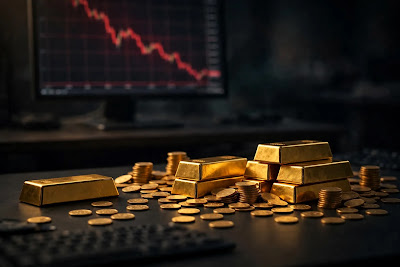
Gold just lost the level everyone was watching. The metal closed below $4,000 an ounce on Friday, October 23, 2026 — its first close under that line since mid-July — capping its worst week in more than four months, even as war risk and oil prices were rising, the backdrop that usually helps it.
What happened, in one answer
Gold settled at about $3,997 an ounce on Friday, down roughly 4.1% for the week, after a sharp 2.81% drop on Thursday and a further 0.71% fall on Friday to about $3,995. That was its lowest close since July 20. Silver fell even harder, dropping to a 2026 low below $54 and closing near $53.83, down about 5.5% for the week.
What happened
The break was not a brief intraday dip. Gold fell for two straight sessions, extended its weekly losing streak to two weeks, and held below $4,000 through the closing bell. Different price feeds put the exact settle between $3,995 and $3,997 an ounce, but every major report agrees on the direction, the size of the weekly loss — about 4.1% — and the milestone: the first close below $4,000 since mid-July, and the steepest weekly decline since June.
That matters because $4,000 was a psychological floor. Round numbers attract orders, headlines and algorithmic triggers, so a weekly close underneath one tends to draw more attention than the size of the move alone would suggest.
Why it's blowing up
The paradox is the story. Gold is usually bought when geopolitical risk rises — yet this week it fell while Brent crude settled at $116.72 a barrel, its highest close since April 29, after Houthi attacks on Saudi energy targets raised fears of wider supply disruption.
Analysts quoted by Reuters explain the twist in two parts. First, higher oil revives inflation fears. If energy keeps inflation stubborn, the Federal Reserve has less room to cut rates and may even raise them again — and gold, which pays no interest, becomes less attractive when other assets offer higher returns. Capital Economics economist Hamad Hussain put it this way, as quoted by Reuters: higher oil prices could keep real interest rates elevated for longer, reducing the relative appeal of holding gold.
Second, part of the selling was mechanical. Analyst Jim Wyckoff linked weakness in gold and silver to the slump in technology stocks, arguing that margin calls forced some investors to raise cash by selling positions they might otherwise have kept. Forced selling says nothing about a long-term view of gold — only about an immediate need for liquidity.
Strong U.S. data added to the pressure. Initial jobless claims for the week ended October 17 fell to 194,000, below the 200,000 forecast and the lowest since late July, giving the Fed more room to prioritise inflation over supporting growth.
Key facts
- Close: Gold settled at about $3,995–$3,997 an ounce on Friday, October 23 — first close below $4,000 since mid-July.
- Week: Down about 4.1%, its steepest weekly fall since June and a second straight weekly loss.
- Silver: Fell to a 2026 low below $54, closing near $53.83, down about 5.5% for the week.
- Oil: Brent crude settled at $116.72 a barrel, its highest close since April 29.
- Fed expectations: CME FedWatch pricing reported this week put the chance of a hold at the October 27–28 meeting at about 92%, while the probability of a December rate rise was put at 78%.
- Counterweight: The World Gold Council reported net central-bank purchases of 39 tonnes in August and 170 tonnes for January through August — buying that cushioned, but did not stop, this week's fall.
- Long-range view: Goldman Sachs and UBS are both sticking with a long-term forecast of $5,400 an ounce for 2027, anchored in expected central-bank demand — a projection, not a guarantee.
What's next
The next test is the Federal Reserve's October 27–28 meeting, followed by PCE inflation data. Markets broadly expect the Fed to hold this month, so the statement's language on December will matter more than the decision itself. A hawkish signal that keeps real yields high would keep pressure on bullion; a softer tone could let an oversold market bounce. Oil headlines from the Middle East remain the other swing factor — this week they hurt gold through the inflation channel rather than helping it through safe-haven demand.
This post reports what happened and why markets reacted. It is not financial advice, and it does not recommend buying, selling or holding any asset.
Sources
- Ad-hoc News — Gold's slide below $4,000, margin calls and the Fed waiting game
- Jawawa / Reuters reporting — Gold falls to a three-month low
- Capital Street FX — Gold below $4,000, silver at a 2026 low, oil near $117
- BigGo Finance — Gold falls below $4,000, safe-haven assets diverge
FAQ
Why did gold fall below $4,000?
Gold fell about 4.1% in the week to October 23 as rising oil prices fuelled inflation fears and expectations of higher-for-longer U.S. rates, while margin calls linked to the tech-stock slump forced some investors to sell to raise cash.
When was gold last below $4,000?
Friday's close near $3,995–$3,997 an ounce was gold's lowest close since July 20, 2026, and its first close below $4,000 since mid-July.
What happened to silver?
Silver fell harder than gold, dropping to a 2026 low below $54 an ounce and closing near $53.83, down about 5.5% for the week.
What could move gold next week?
The Federal Reserve's October 27–28 meeting, its guidance on a possible December rate rise, PCE inflation data, and Middle East oil headlines are the main events markets are watching.