 Forward Future
NextDC Stock Crashes 44% in One Day: A Power Delay Just Wiped A$3.1 Billion Off an AI Data Centre Giant
2026-10-20
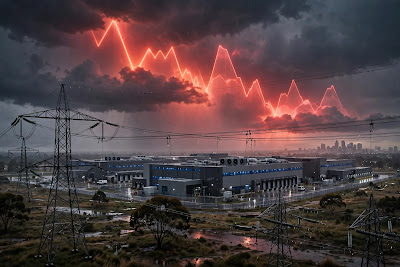
What happened to NextDC stock?
NextDC shares plunged 44% on Wednesday, October 21, wiping about A$3.1 billion off the Australian data centre operator's market value in early trade. The crash came after the company sharply cut its revenue and earnings forecasts for the year ahead and put all future development on hold, because electricity upgrades for its M3 Melbourne data centre have been delayed. The stock was the biggest loser on Australia's ASX 200 benchmark and fell to its lowest level since January.
Why did NextDC cut its guidance?
The problem is power, not demand. NextDC said delays to electricity network upgrades at M3 Melbourne mean about A$140 million (about $98 million) of contracted customer revenue this financial year will be deferred. Network operator Jemena Electricity Networks has suspended parts of the works needed to increase power supply to M3 after opposition from the community and stakeholders, and does not expect to restart them before February 2027. The next increase in power supply to M3 is now expected in 2028, not this financial year.
Because that contracted capacity cannot be switched on on schedule, NextDC cut its FY27 net revenue forecast to A$475 million to A$500 million, down from A$615 million to A$640 million. It cut its FY27 underlying EBITDA forecast even harder, to A$245 million to A$265 million, down from A$385 million to A$410 million. Both new forecasts exclude the affected M3 contracts.
What else did NextDC announce?
NextDC is hitting pause across the business. It will shelve all new development projects and land acquisitions for the foreseeable future, and it will evaluate capital recycling opportunities, including potential sales of selected development sites. It also lowered its FY27 capital expenditure outlook to A$4.5 billion to A$5 billion, from A$5.25 billion to A$5.75 billion, and said it has begun a detailed review of its spending programme.
RBC Capital Markets analyst Tom Beadle, quoted by Reuters, said the delay — while outside the company's control — is evidence that community concerns around data centre developments present a real risk to the timing of delivery of contracted capacity for data centre owners.
Why is this blowing up beyond one stock?
NextDC has become the latest stress test for the global AI infrastructure trade. Money has poured into data centre operators on expectations that surging AI demand will drive a new wave of digital infrastructure spending. In recent weeks, however, sentiment has weakened as investors question whether massive AI spending can justify soaring computing, land and power costs.
Signs of strain were already emerging before Wednesday: a data centre IPO was withdrawn in Australia last week, and credit investors have become increasingly selective toward AI-linked companies. NextDC's problem underlines a point the market is now pricing in fast — for an AI data centre, signing customers is not enough. If the power connection, planning approvals and grid upgrades do not arrive on time, contracted revenue cannot be recognised, no matter how strong demand is.
The contrast inside the same trading week is stark. In the United States, Super Micro Computer surged after raising its revenue guidance on AI server demand, lifting peers such as Dell and Hewlett Packard Enterprise. In Australia, one of the region's flagship AI infrastructure names lost nearly half its value in a single session — not because customers disappeared, but because the electricity did not arrive.
Key facts at a glance
- Share move: NextDC fell 44% in early trade on October 21, wiping about A$3.1 billion from its market value and making it the ASX 200's biggest loser.
- Deferred revenue: About A$140 million ($98 million) of contracted M3 customer revenue is deferred this financial year.
- New FY27 revenue guidance: A$475 million to A$500 million, down from A$615 million to A$640 million.
- New FY27 underlying EBITDA guidance: A$245 million to A$265 million, down from A$385 million to A$410 million.
- Cause: Jemena suspended parts of the M3 power network works amid community opposition; work is not expected to resume before February 2027, and the next M3 power increase is now expected in 2028.
- Response: All new developments and land purchases paused; FY27 capex cut to A$4.5 billion to A$5 billion; possible sales of selected development sites being evaluated.
What's next for NextDC?
Investors will now watch three things: whether Jemena's suspended works really restart around February 2027, whether NextDC's spending review leads to asset sales or a smaller build-out, and whether the deferred M3 contracts stay contracted while customers wait for power. The long-term AI demand story has not changed in one day — but NextDC just showed the market that in the AI infrastructure race, power delivery is now a headline financial risk, not a background engineering detail. This post reports what happened and why markets reacted; it is not financial advice.
FAQ
Why did NextDC stock fall 44%?
NextDC sharply cut its FY27 revenue and EBITDA guidance after power network delays at its M3 Melbourne data centre deferred about A$140 million of contracted revenue, and it paused all new development.
What caused the M3 Melbourne power delay?
Jemena Electricity Networks suspended parts of the upgrade works amid community and stakeholder opposition, does not expect to resume before February 2027, and the next M3 power increase is now expected in 2028.
What is NextDC's new FY27 guidance?
Net revenue of A$475 million to A$500 million (was A$615 million to A$640 million) and underlying EBITDA of A$245 million to A$265 million (was A$385 million to A$410 million), excluding the affected M3 contracts.
Is NextDC still building new data centres?
Not for now — it has shelved all new development projects and land acquisitions for the foreseeable future, cut FY27 capex to A$4.5 billion to A$5 billion, and is evaluating possible sales of selected development sites.
Sources
- Reuters via WNFL — Australian AI data centre operator NextDC shares shed 44% on revenue delay
- SKN Finance — NextDC shares plunge 44% as Melbourne power delays force a major cut to its revenue forecast
- Pluang — NEXTDC shares drop 44% after power delays force guidance cut
- EverHint — Stock Market News October 20, 2026 Evening Update