 Forward Future
Nvidia's H200 Licenses Under Fire: Chip Buyers With Empty Offices
2026-11-08
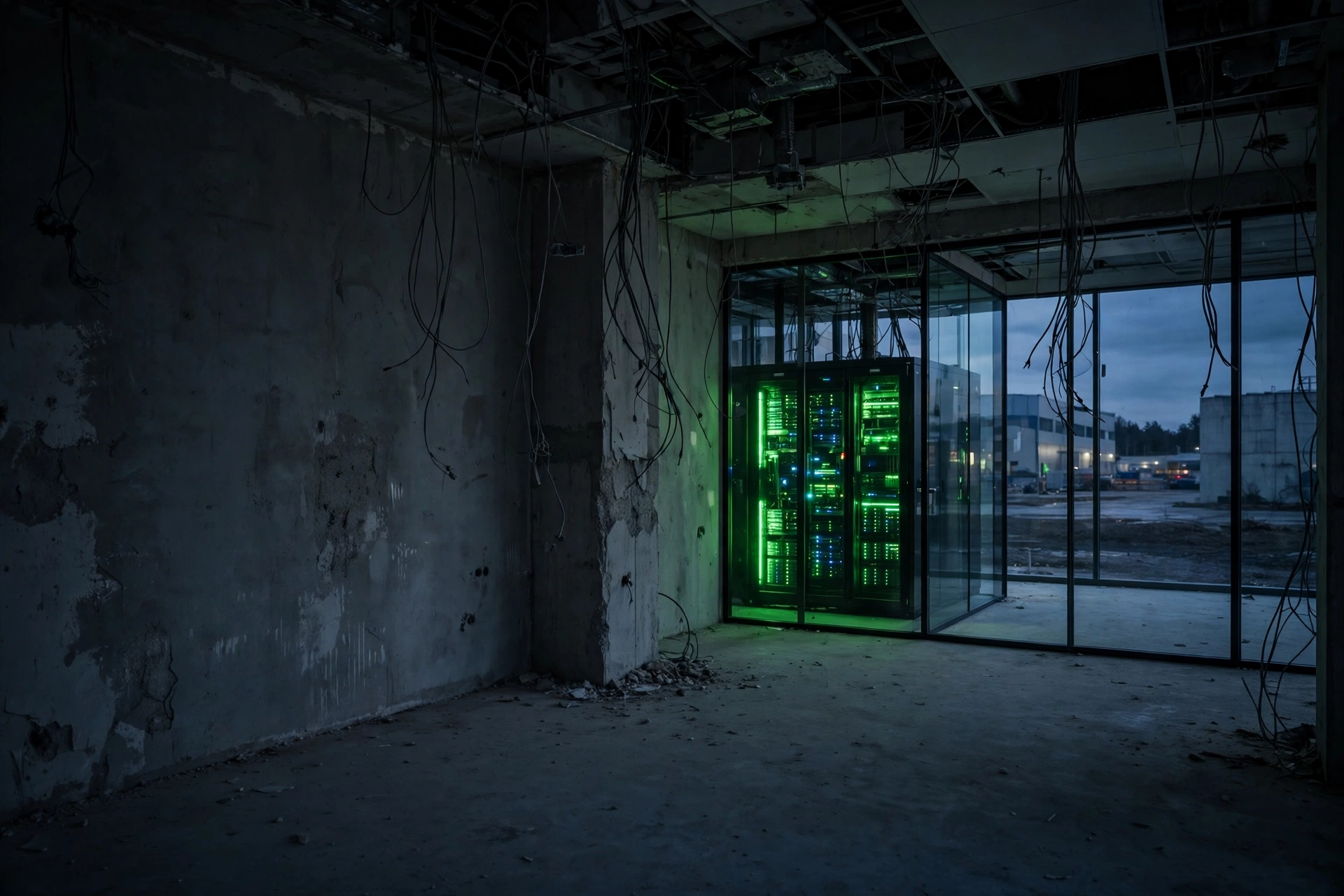
The short version: A New York Times investigation published on November 7 found that the U.S. Commerce Department licensed roughly two dozen Chinese companies to buy or handle Nvidia's H200 AI chips — and that at least two of them, New Matrix and Maginfra, had empty offices at their registered addresses and ownership or personnel links to firms already on the U.S. trade blacklist. Nvidia shares had closed Friday at $186.64, and the report lands nine days before the company's November 17 earnings.
What happened
The H200 is one of the most powerful AI processors the United States allows to be sold to China. President Donald Trump opened the door to those sales late last year, and in January 2026 the Commerce Department's Bureau of Industry and Security (BIS) moved H200 license reviews from a presumption of denial to case-by-case review. Since then, about two dozen Chinese companies have been cleared to buy the chips or assemble them into AI servers — a list that also includes Baidu, BYD and Tesla's Shanghai operation.
The two companies at the center of it
New Matrix, based in Beijing, was formed about 17 months ago and was approved this year to assemble H200 chips into AI computers. Reporters who visited its listed address, in a new industrial park on Beijing's northwestern edge, found an empty grey shell with wires hanging where ceiling lights should be. It was missing from the building directory, the park's property manager had no record of it, and its website listed no employees or corporate history as of November 6. Chinese corporate filings connect its principals to Wise Road, a private-equity fund Commerce placed on its Entity List in 2024 for helping Beijing acquire strategically sensitive chip technology. Wise Road's founder also chairs state-controlled Tsinghua Unigroup, whose subsidiary was blacklisted in 2021.
Maginfra, licensed in September as an assembler of AI servers, also had a deserted listed office when visited. Analysts cited in the investigation describe it as an offshoot of Inspur, the server maker placed on the Entity List over its work with China's military; the two reportedly share personnel, patents and state ownership. Two other approved firms were flagged for looser connections: Zhejiang Yindun Cloud Technology, linked to a cloud provider that has sold services to military contractors, and Shanghai Jiatang, which traces to state-owned Datang Telecom.
What Commerce and Nvidia say
BIS says it scrutinizes every application for national-security risk, points to $324 million in penalties levied on export-control violators last year, and says it has hired more than 90 additional enforcement staff this year. An Nvidia spokesman argued it makes no sense for China's military to depend on American technology. Two limits deserve stating plainly: the investigation did not establish that either firm received any H200 chips, or that approved chips reached China's military. An empty office is a red flag about vetting, not proof of a diversion.
Separately, Commerce is extending its pause on a rule that would automatically extend blacklist restrictions to companies at least 50% owned by listed parties. The pause was due to end November 9 and will now run through January 10, 2027, per a notice filed November 5.
Why it's blowing up
The timing is combustible. Nvidia is down sharply from its October peak after last week's chip selloff, roughly 600,000 H200 chips are reported to be sitting in Hong Kong awaiting Beijing's own import approval, and three Republican House committee chairs have asked CEO Jensen Huang for a closed-door briefing on November 18 about a separate intelligence concern. Layered on top is a long-running gap between paper and reality: a Commerce official told Congress in July that, despite roughly $10 billion in approved H200 licenses, shipments had been "very few." Nvidia itself says H200 shipments to China-based customers were under 1% of its data-center revenue in the quarter ended in July, and its guidance assumes no China data-center compute revenue at all.
What's next
Watch three dates. Nvidia reports earnings on November 17, when management will almost certainly be asked about China licensing. The requested congressional briefing follows on November 18. And any Commerce move — a revocation, a public explanation of the vetting, or silence — will show whether this stays a reputational story or becomes a policy change that closes the H200 channel.
FAQ
What did the investigation find? That at least two Chinese firms licensed to handle Nvidia H200 chips — New Matrix and Maginfra — had empty registered offices and links to blacklisted companies, raising questions about how Commerce vets applicants.
Did any chips reach China's military? That has not been established. The reporting does not show that either firm received H200 chips, let alone passed them to the military.
How big is China H200 business for Nvidia right now? Small. Nvidia says China-based H200 shipments were under 1% of data-center revenue in the quarter ended in July, and a Commerce official told Congress in July that shipments overall had been "very few" despite about $10 billion in approved licenses.
What happens next? Nvidia reports earnings on November 17, House committee chairs have requested a briefing with Jensen Huang on November 18, and Commerce has not publicly said whether it will review or revoke the licenses in question.
Sources: BigGo Finance; AI Stock Wire / Jerusalem Post account; KuCoin News; TFTC; TechTimes.