 Forward Future
OPEC+ Holds December Oil Output Steady as Brent Tops $113
2026-11-01
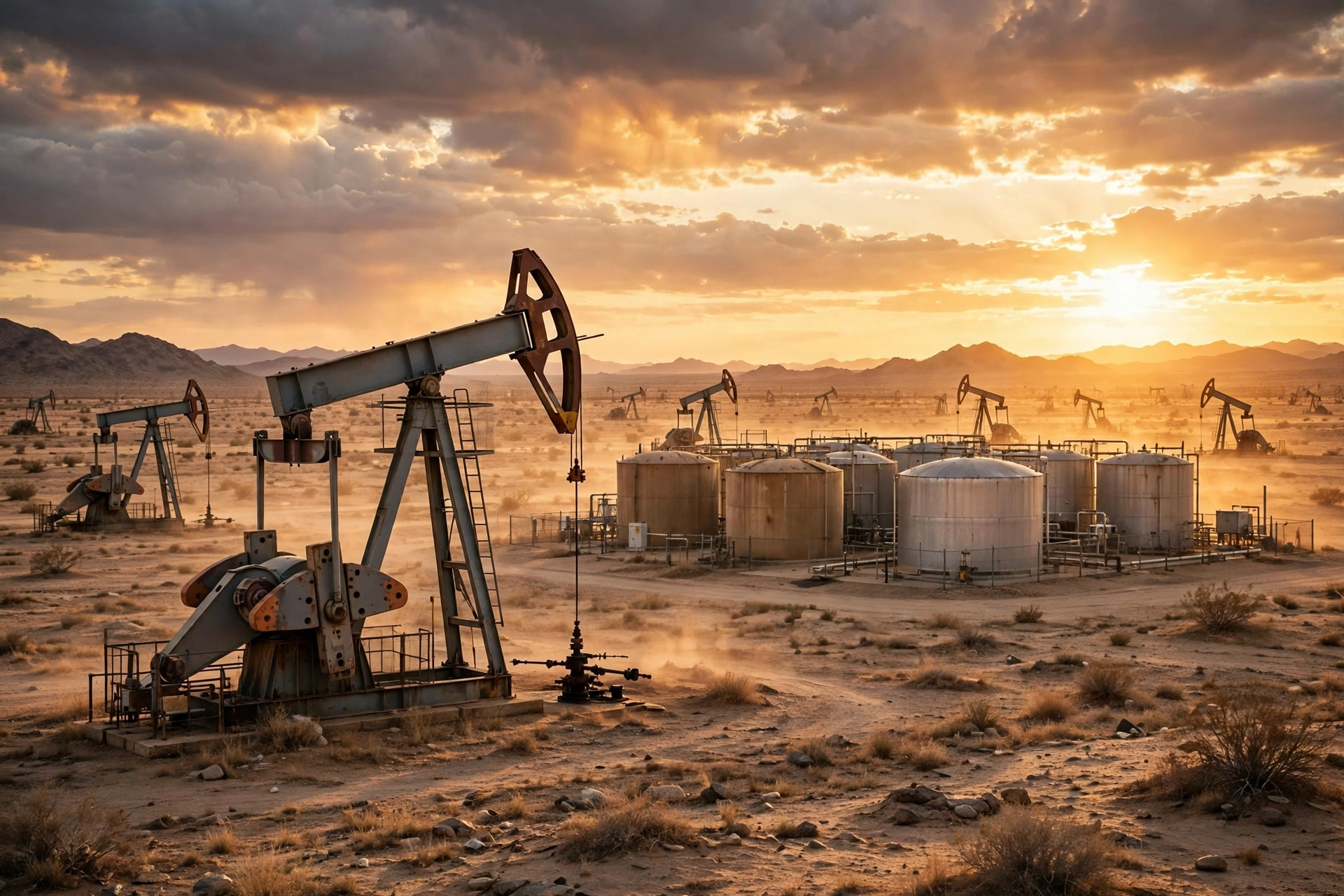
OPEC+ has agreed in principle to keep its December oil output targets unchanged, according to a Reuters report citing three people familiar with the matter — leaving supply policy on hold while Brent crude sits near a six-month high above $113 a barrel. The understanding is expected to be confirmed at an online meeting on Sunday, 1 November, of seven core members: Saudi Arabia, Russia, Iraq, Kuwait, Algeria, Kazakhstan and Oman.
What happened, in one answer
OPEC+ producers agreed in principle to leave December production targets where they are. The decision is not yet a formal announcement from the group — it was reported by Reuters on Saturday, citing unnamed sources — but it matches the outcome markets had expected: no further change to output policy until next year, while the group reviews members' production capacity before setting its 2027 quotas.
Why it is blowing up now
The hold lands at a tense moment for oil. Brent crude, the global benchmark, rose more than 2% on Friday. The December contract, which expired that day, settled up $2.76, or 2.4%, at $117.64 a barrel after touching $118, while the more active January contract gained $2.63 to $113.43. U.S. West Texas Intermediate rose $2.12, or 2.08%, to $104.12. Traders were bracing for a possible escalation in the war, after a tanker was hit in the Strait of Hormuz, and Brent is up nearly 11% over the past month and about 75% over a year. With prices that high, a production cut would have added pressure, and an increase would have been hard to deliver while Gulf shipments are still recovering.
The key facts
Who decided: Seven core OPEC+ members — Saudi Arabia, Russia, Iraq, Kuwait, Algeria, Kazakhstan and Oman — are due to ratify the agreement at Sunday's online meeting. OPEC+ pairs the Organization of the Petroleum Exporting Countries with allies led by Russia.
What stays in place: In September, the group completed the phased unwinding of a 1.65 million-barrel-a-day supply cut first agreed in April 2023. A separate layer of cuts of about 2 million barrels a day, covering most members, remains in place through the end of 2026. During 2026, the seven core members raised quotas by nearly 800,000 barrels a day from April through July.
Why Gulf output matters: Gulf producers have been raising exports that were disrupted for months by the war with Iran, and several have been pumping below their quotas. That means headline targets and barrels actually reaching the market are not the same thing — one reason a formal hold changes less than it appears to.
What it means at the pump: U.S. fuel prices remain elevated. According to American Automobile Association data cited in the coverage, regular gasoline averages $4.1837 a gallon, while diesel at $6.3101 a gallon sits just 3.3% below its all-time high of $6.5276, set on 22 September.
What successful coverage is focusing on
Most reporting stresses the same point: this is a pause, not a pivot. Reuters reported in July that OPEC+ was likely to make no fourth-quarter changes, as attention turned to 2027 quotas. Before baselines can be set, the group must complete a fourth-quarter review of members' production capacity — the levels that will govern future quotas and any plan to return remaining barrels to market. OPEC+ did not immediately respond to a request for comment.
What's next
Watch two things. First, Sunday's online meeting: a formal confirmation would lock the December hold in, while any surprise change would move a market already trading above $113. Second, the capacity review: the 2027 baselines it produces will decide how much room each member has to pump next year, and whether the roughly 2 million barrels a day of remaining cuts start coming back. Until then, supply policy is on hold, and oil prices will be driven more by shipping through Hormuz, the war, and demand than by OPEC+ itself. This article reports what happened and why markets reacted; it is not a recommendation to buy, sell, or hold any asset.
Sources
TradingView / Benzinga — OPEC+ keeps December oil targets unchanged as Brent hovers near six-month high
Reuters via Europe Says — OPEC+ agrees to keep oil output targets steady in December
BigGo Finance — OPEC+ nears deal to freeze December output as Brent tops $113
AsiaToday — OPEC+ to hold December oil output targets steady
FAQ
What did OPEC+ decide about December oil output?
OPEC+ agreed in principle to keep December output targets unchanged, according to Reuters sources. Seven core members are expected to confirm the hold at a Sunday online meeting.
Is the OPEC+ decision final?
Not yet. It is an agreement in principle reported by unnamed sources, not a formal OPEC+ announcement, so it should be treated as provisional until the group confirms it.
Why does the decision matter when Brent is above $113?
With Brent near a six-month high — the expired December contract settled at $117.64 on Friday and January at $113.43 — holding supply steady avoids adding to price pressure, while an increase would have been hard to deliver as Gulf exports recover from war disruption.
What happens to OPEC+ policy in 2027?
The group must first finish a fourth-quarter review of members' production capacity. That review will set the 2027 baselines that govern future quotas and any plan to unwind the remaining roughly 2 million barrels a day of cuts.