 Forward Future
Shell Profit Hits $10.81 Billion, Highest Since 2022 — and Buybacks Jump to $5 Billion
2026-10-29
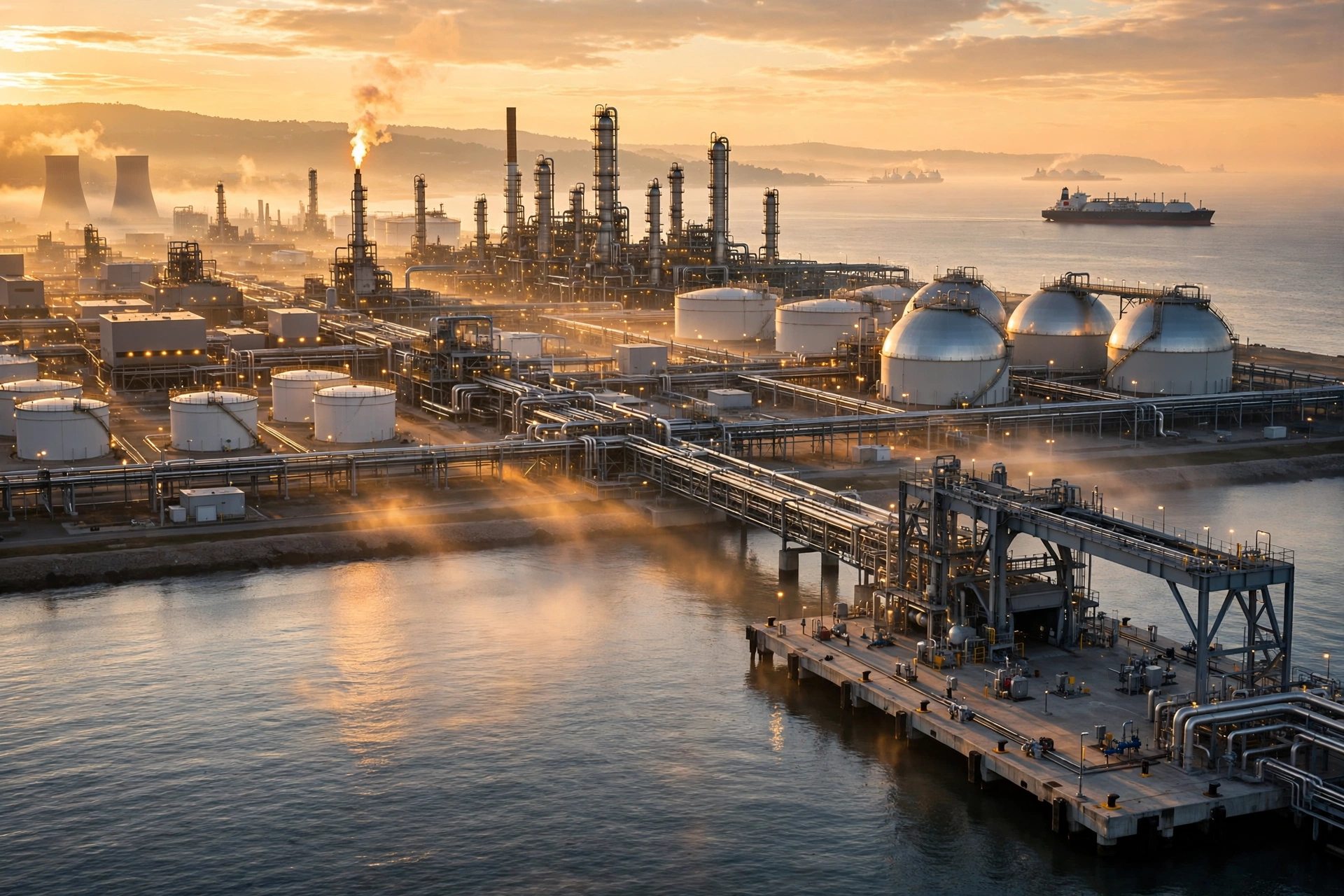
Shell posted adjusted earnings of $10.81 billion in the third quarter of 2026, its highest quarterly profit since 2022, and raised its share buyback to $5 billion. The result, reported on Thursday, October 29, almost doubled the $5.43 billion Shell earned a year earlier and beat the $10.33 billion average estimate in a company-provided analyst poll. Shell shares rose about 2.9% in early London trade, outpacing a broader European energy index, as record refining margins did the heavy lifting.
What happened
Shell said every major business segment came in ahead of expectations. Its integrated gas business earned $3.04 billion, above the $2.93 billion expected, while upstream earnings of $3.19 billion also topped forecasts of $3.10 billion. Cash flow from operations, excluding working capital, rose to $21.7 billion, up from $12.24 billion a year earlier and well above expectations of $18.18 billion. On the back of that cash generation, Shell lifted the pace of its quarterly buyback programme to $5 billion, up from $3 billion — its second-largest buyback on record, behind only the $6 billion programme launched in the second quarter of 2022.
The number that explains the quarter: $42 a barrel
The standout figure was Shell's indicative refining margin, which hit a record $42 a barrel. That compares with $11.6 a barrel a year ago and $24 a barrel in the previous quarter. In plain terms, turning crude oil into diesel, jet fuel and other products became far more profitable than usual, and Shell's large refining system captured that spread at scale. Higher liquefied natural gas prices also helped the integrated gas business, which is why profits rose across the board rather than in a single division.
Why it's blowing up
Reuters reported that the war involving the United States, Israel and Iran, now in its ninth month, has disrupted global energy supplies and pushed prices higher, creating the conditions for those record fuel margins. That backdrop is why Shell is a clear bellwether for what disrupted supply does to fuel economics. Energy stocks climbed in Europe even as technology shares weakened after Alphabet's results.
The other side of the story: less oil and gas produced
The profit surge did not come from producing more. Shell's oil and gas output fell 17% in the first nine months of 2026 from a year earlier, mainly because the Middle East conflict reduced volumes from Qatar. Production at Shell's Pearl gas-to-liquids plant in Qatar was halted in March after an attack on the Ras Laffan Industrial City damaged one of its two trains; the plant has partially restarted, but Shell has said repairs could take about a year. Offsetting part of that loss, LNG liquefaction volumes rose 12%, driven by the ramp-up of LNG Canada. Shell earned far more from each barrel it did sell, even while selling less overall.
Key facts
- Profit: Adjusted earnings of $10.81 billion in Q3 2026, versus $5.43 billion a year earlier and a $10.33 billion company-polled consensus.
- Refining: A record indicative margin of $42 a barrel, versus $11.6 a year ago and $24 last quarter.
- Buyback: Quarterly buybacks raised to $5 billion from $3 billion, the second largest in Shell's history.
- Segments: Integrated gas earned $3.04 billion and upstream $3.19 billion, both ahead of expectations.
- Cash flow: Operating cash flow excluding working capital rose to $21.7 billion, from $12.24 billion a year earlier.
- Shares: Up about 2.9% in early trade, ahead of a 0.7% gain for the broader European energy index.
What's next
The open question is how long a $42 refining margin can last. Margins that extreme usually reflect tight fuel supply, so any easing in the Middle East conflict, new refining capacity, or weaker fuel demand could pull them back toward normal levels quickly. For now, investors are focused on whether Shell's cash flow holds up into the fourth quarter, how fast the Pearl plant repairs progress, and whether the larger $5 billion buyback pace is maintained. Shell's result also sets the bar for the rest of the European energy earnings season, with rivals reporting into the same war-driven price backdrop.
Sources
Reuters via Euronext Live — Shell posts highest quarterly profit since 2022, hikes buybacks
Reuters — Shell beats expectations with $10.8 billion profit, hikes buybacks
Morningstar / Dow Jones — Shell to launch $5 billion share buyback as earnings soar
MarketSpeaker — Shell Q3 2026 earnings beat lifts shares, $5 billion buyback
FAQ
How much profit did Shell make in Q3 2026?
Shell reported adjusted earnings of $10.81 billion, its highest quarterly profit since 2022 and almost double the $5.43 billion it earned a year earlier.
Why did Shell's profit jump so sharply?
Record refining margins of $42 a barrel, stronger LNG prices and results ahead of expectations in both integrated gas and upstream drove the increase, as war-disrupted energy supplies pushed fuel prices higher.
How big is Shell's new buyback?
Shell raised its quarterly share buyback to $5 billion, up from $3 billion. It is the company's second-largest buyback on record, behind the $6 billion programme from 2022.
Did Shell produce more oil and gas?
No. Output fell 17% in the first nine months of 2026, mainly on lost Qatar volumes, while LNG liquefaction volumes rose 12% on the LNG Canada ramp-up. Higher prices and margins, not higher volumes, drove profit.