 Forward Future
60% of S&P 500 Stocks Are Now in a Bear Market — While the Index Hides It
2026-10-31
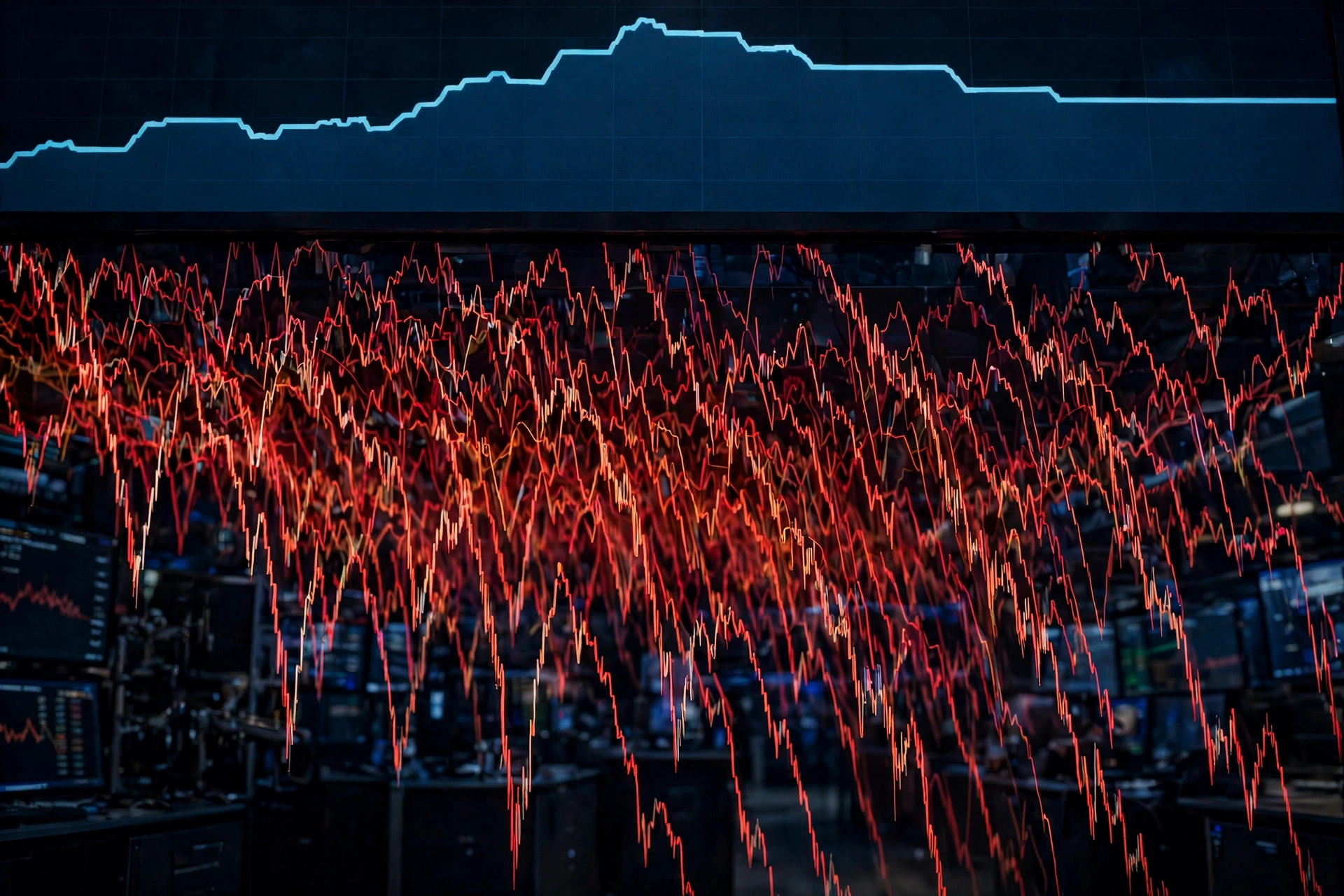
Over 60% of S&P 500 stocks are now at least 20% below their record highs — in bear-market territory — even though the index itself remains close to its peak. That is the finding from data compiled by The Kobeissi Letter and reported on Saturday, October 31, and it explains why this market feels weak to most investors even when the headline numbers look resilient.
What happened
The Kobeissi Letter reported that more than 60% of S&P 500 components are now down 20% or more from their respective record highs, the commonly used definition of a bear market for an individual stock. The share has worsened from an earlier reading of 59%, and an earlier version of the same analysis found 84% of constituents down at least 10% from their highs.
The damage is no longer limited to small or obscure names. Four of the Magnificent Seven stocks have fallen 15% or more from their peaks, and the group has collectively erased approximately $4 trillion in market value from its highs. Alphabet is down 31% from its all-time high of $400 to $282, and Meta has slumped more than 21% since its peak in mid-August. The Nasdaq 100, Kobeissi noted, is now down nearly $5 trillion since October 6.
For context, the index itself finished Friday, October 30 at 7,580.07 and fell only 0.9% in October — nothing like a market in which three-fifths of its members are in bear territory.
The worst-hit names
Technology and crypto-linked stocks lead the declines. According to Kobeissi's list, AppLovin has fallen 68% from its all-time high, Coinbase 62%, CoreWeave 60%, Western Digital 54% and Intel 54%. Oracle is down 51%, SanDisk 49%, Circle 48%, and Robinhood and ServiceNow 44% each. Broadcom is down 34%, Adobe 29%, Micron 29%, and Amazon 21%.
A stock down 50% needs to double just to regain its old high — which is why the gap between the index and the typical stock in it now defines this market.
Why it is blowing up
The story is going viral on Saturday because it puts a single number on a frustration felt for months: owning “the market” and owning most stocks have become very different experiences. Kobeissi's earlier analysis found that only 10 companies accounted for roughly 70% of the S&P 500's advance from its March 30 bottom.
Commentary over the weekend has picked up the same thread. One widely shared market note observed that the S&P 500 has essentially gone nowhere since June once a few strong trading sessions are removed, while roughly 60% of individual stocks have fallen 20% or more this year — with fast rotations between growth and value stocks taking turns supporting the index.
Why the index hides it
A market-cap-weighted index gives its biggest members the largest influence, so a few mega-caps can offset declines across hundreds of smaller constituents. That is why breadth — how many stocks are actually participating — can deteriorate for weeks before the headline index reacts. The risk, commentators note, is that the rotation keeping the index stable only works while one group rises as the other falls. If growth and value fall together, that support disappears.
What's next
Kobeissi itself does not call this the start of a prolonged collapse — it has framed the divergence as a potential opportunity as well as a warning. A steep fall does not by itself make a stock cheap. The test comes quickly: Apple reports on Monday, November 2, followed by U.S. midterm elections on Tuesday and the October jobs report on Friday.
This report describes what the data shows and how markets reacted. It is not a recommendation to buy, sell or hold any security.
Sources
- CryptoPotato — The 'Stealth' Bear Market Is Getting Worse: 60% of S&P 500 Stocks Are Now Down 20%+
- HokaNews — Over 60% of S&P 500 Stocks Fall Into Bear Market Territory
- Lance Roberts — 60% Of Stocks Are In A Bear Market — So Why Isn't The S&P 500?
- TradingView / Benzinga — S&P 500 Near Record Highs, But 60% of Stocks Are in a Bear Market
FAQ
What does it mean that 60% of S&P 500 stocks are in a bear market?
It means more than 60% of the index's individual companies are trading at least 20% below their own record highs, which is the common definition of bear-market territory for a single stock — even though the overall index is not down 20%.
Why is the S&P 500 itself not in a bear market?
The index is weighted by company size, so a small number of very large stocks can offset falls across hundreds of smaller members. Only 10 companies generated roughly 70% of the index's advance from its March 30 low.
Which big stocks have fallen the most from their highs?
AppLovin is down 68%, Coinbase 62% and CoreWeave 60%, while Alphabet is down 31% from $400 to $282 and the Magnificent Seven together have lost about $4 trillion from their peaks.
Is this a sign the whole market is about to crash?
Not necessarily. The Kobeissi Letter has described the divergence as a potential opportunity as well as a risk, and analysts note the key danger is growth and value stocks falling at the same time, which has not been confirmed by the index itself.