 Forward Future
Stock Futures Reopen Tonight After Worst Week Since April — Volatility Is the Story
2026-11-08
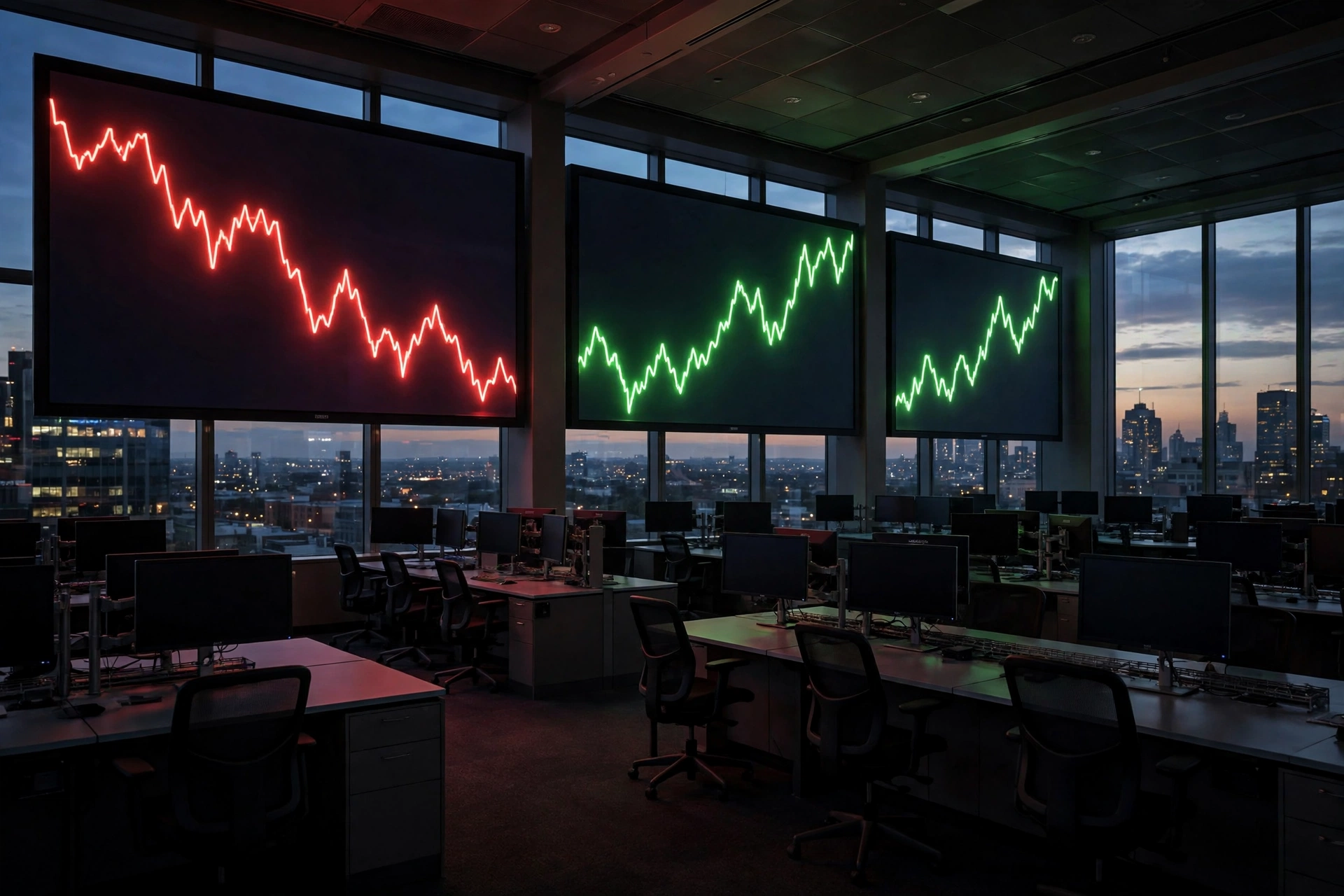
U.S. stock futures reopen Sunday night after the worst week for the S&P 500 since April 2025, with investors bracing for more volatility as questions over the AI trade, a new Democratic-controlled Congress, and Tuesday's inflation report collide. Futures had not yet opened when the Sunday preview was published, so there is no opening print to report yet — the story tonight is the setup, not a number.
What happened last week, in numbers
The Dow Jones Industrial Average closed down 0.9% for the week at 51,285.73, dropping 3.9% over its last two trading days, according to Dow Jones Market Data reported by Barron's. The S&P 500 fell 2.7% to 7,376.86 — its largest one-week point and percentage decline since the week ending April 4, 2025. The Nasdaq Composite dropped 3.4% to 24,579.42, its largest one-week point and percentage drop since the week ending October 16. An independent weekly wrap from GAMSG, citing YCharts data for November 2 to November 6, put the same moves at S&P 500 down 2.68%, Nasdaq down 3.37%, and Dow down 0.94% — matching Barron's figures within rounding.
Thursday did most of the damage. Barron's noted Thursday's rout was the biggest one-day percentage drop for stock indexes since April 4, 2025, the week after the so-called Liberation Day tariffs were announced. GAMSG put Thursday at S&P 500 down 4.4% and Nasdaq down about 5.5%, with technology leading all three averages lower. Friday steadied somewhat after a stronger-than-expected jobs report, but not enough to repair the week.
Why it's blowing up tonight
Sunday night is the first chance for traders to react with fresh positioning after a weekend of digesting three things at once. First, unease over the artificial-intelligence trade and future spending on AI data centers, now under an incoming Democratic-controlled Congress and Democratic-led state governments, as Barron's put it. Second, skepticism that has been building for months: Fiduciary Capital Management, in a Saturday note cited by Barron's, said the Nasdaq essentially made all its 2026 gains in April and May — up more than 27% in those two months — and was down 8.1% from June 1 to November 1. The firm said conditions for a broad equity bounce are not on the near-term horizon, and doubted any meaningful recovery in sentiment soon given the scale of money, debt, and spending promises committed to the AI trade.
Third, rates. Markets see the Federal Reserve raising interest rates again in December, Barron's reported, with solid growth and inflation persistently well above target described as a recipe for further hikes. That makes Tuesday's data more than a routine release.
Key facts
- Weekly closes (Friday, November 6): Dow 51,285.73, down 0.9%; S&P 500 7,376.86, down 2.7%; Nasdaq Composite 24,579.42, down 3.4%. All three are still up for the year — Dow up 6.7%, S&P 500 up 7.8%, Nasdaq up 5.8% — per Barron's / Dow Jones Market Data.
- Thursday's rout: S&P 500 down 4.4% on the day (GAMSG), the biggest one-day percentage drop since April 4, 2025 (Barron's).
- At the pump: Gasoline averaged $4.020 a gallon on Sunday, down from $4.361 a month ago but up from $3.073 a year ago, according to AAA via Barron's. Diesel averaged $4.936.
- This week's calendar: October consumer price index on Tuesday and producer price index on Friday, per both Barron's and GAMSG's calendar. GAMSG also lists Cisco Systems and Applied Materials reporting Thursday.
- Overseas last week: The MSCI EAFE index of developed overseas markets slid 1.95%, per GAMSG.
Sources: Barron's — Investors Brace for Volatility When Stock Futures Begin Trading Tonight; GAMSG — Weekly Market Insights, November 8, 2026
What's next
The futures open itself is only an early signal — overnight moves can reverse before Monday's opening bell, and a quiet Sunday print would not settle whether Thursday was a steeper step in a broad rerating of AI prospects or a capitulation, as Fiduciary framed it. The harder tests come during the week: Tuesday's CPI will show whether inflation is still running well above target heading into the Fed's December meeting, Friday's PPI adds the producer-side view, and Thursday's reports from Cisco and Applied Materials give a fresh read on AI infrastructure demand from inside the sector itself. Until those land, volatility — not direction — is the consensus expectation for tonight.
This article reports what happened and why markets reacted. It is not financial advice, and it does not recommend buying, selling, or holding any security.
FAQ
When do U.S. stock futures reopen on Sunday?
Stock futures are set to begin trading Sunday night ahead of Monday's regular session, according to Barron's Sunday preview. No opening levels had been published when that preview appeared.
How much did the major indexes fall last week?
For the week ending Friday, November 6, the S&P 500 fell 2.7% to 7,376.86, the Nasdaq Composite fell 3.4% to 24,579.42, and the Dow fell 0.9% to 51,285.73.
Why are investors nervous about the AI trade?
Barron's cited unease over AI valuations and future data-center spending under the incoming Democratic-controlled Congress, while Fiduciary Capital Management noted the Nasdaq made all its 2026 gains in April and May and was down 8.1% from June 1 to November 1.
What is the biggest market event this week?
The October consumer price index on Tuesday is the week's headline release, followed by the producer price index on Friday — both matter because markets currently expect another Federal Reserve rate increase in December.