 Forward Future
Trump Blames $3 Trillion Market Loss on Democrats' Midterm Sweep: 'A Giant Step Back'
2026-11-08
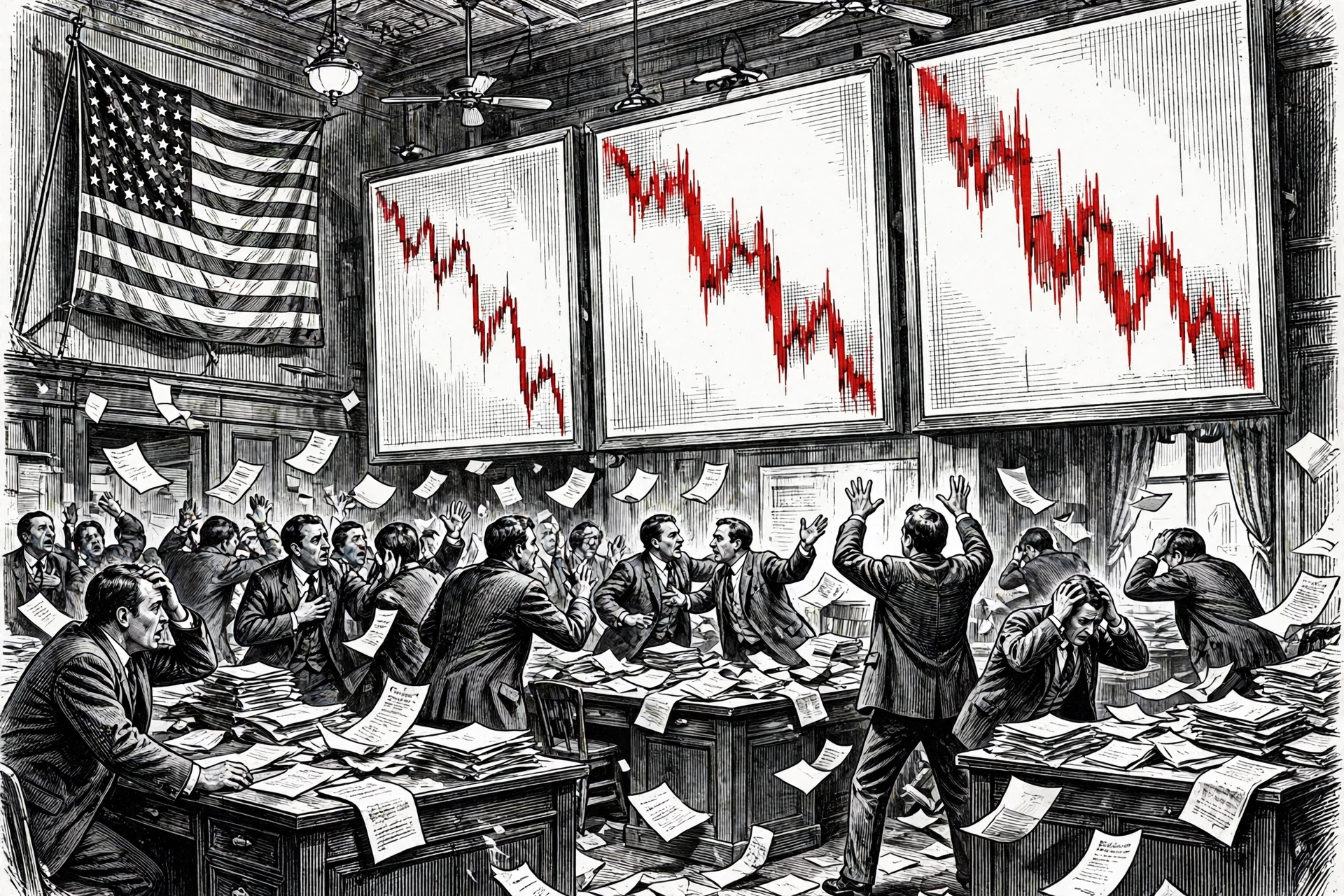
President Donald Trump on Sunday blamed the Democrats' midterm election sweep for a one-day, $3 trillion stock market loss, calling the result a "giant step back in History" in a Truth Social post — hours before U.S. stock futures reopen for the week. The figure matches a Reuters estimate of the value wiped from S&P 500 companies on Thursday, November 5, though analysts say the selloff was driven mainly by fears over tougher artificial-intelligence rules and slower data-center approvals, not by the election result alone.
What Trump said on Sunday
"America took a giant step back in History with the results of the last Election," Trump wrote on Truth Social on Sunday morning. He said the stock market, which he described as a "ROCKETSHIP" under his leadership, had taken "a one day, 3 Trillion Dollar loss." He ended the post with a promise: "But have no fear, we will be back, BIGGER AND STRONGER THAN EVER BEFORE!"
The post, shared widely on Sunday including by Blockonomi's report of The Kobeissi Letter's post, was Trump's clearest statement yet on the November 3 midterms, in which Democrats won control of both the Senate and the House of Representatives. Trump had already made the same argument in person on Friday, telling reporters in Florida: "We lost about $3 trillion when they found out that the Democrats did well in the election, rather surprisingly, but that's the way life goes."
What actually happened in the market
The timeline matters, because the first market reaction to the election was a rally, not a crash. On Wednesday, November 4, the day after the vote, the Dow Jones Industrial Average jumped 1,569 points, or 3 percent — its best showing after a midterm election in 44 years — and the S&P 500 gained 1.58 percent, according to Zark News, citing Reuters and Agence France-Presse reporting.
The fall came a day later. On Thursday, November 5, the Nasdaq Composite dropped 5.52 percent to 24,315, its worst day in 19 months. The S&P 500 fell 4.36 percent to 7,353.73, and the Dow declined 3.44 percent to 51,523.06. Reuters reported that the selloff wiped out about $3 trillion in value from S&P 500 companies — close to the figure the president cited. Chip and AI stocks led the decline: Nvidia fell about 9.3 percent, Advanced Micro Devices and Micron Technology each dropped around 17 percent, and the Philadelphia Semiconductor Index fell about 12 percent.
Why analysts disagree on the cause
Where analysts part ways with the president is over why investors sold. Reuters and other market reports said traders sold technology and chip stocks because they feared tougher rules on artificial intelligence and slower approvals for new data centers under a Democratic-controlled Congress and Democratic-led state governments. Some winning Democratic candidates, including the incoming governor of Texas, had campaigned on pausing new data-center projects. Traders also pointed to high technology valuations and to forced selling by funds that had borrowed money to invest.
In other words, the $3 trillion number is real as an estimate of Thursday's losses, but the claim that the election result alone caused it is Trump's own. The new Congress does not take office until January, no new AI law has been passed, and proposed state-level restrictions on data centers have not automatically become law.
Why the post is blowing up now
The post landed on a Sunday when investors were already bracing for a volatile reopen. U.S. stock futures were set to begin trading Sunday night after a roller-coaster week fueled by unease over the AI trade and future spending on AI data centers, according to Barron's. All three major indexes ended the week lower, and markets are now looking ahead to the October consumer price index on Tuesday and the producer price index on Friday — data that will shape expectations for a possible Federal Reserve rate increase in December.
Politically, the fight is just starting. Democratic leaders have promised investigations into the administration and fights over its spending and immigration policies, while Trump retains the veto pen — lawmakers need a two-thirds majority in both chambers to override him. That standoff, layered on top of a fragile AI trade, is why a single social-media post could move the conversation hours before futures opened.
What's next
The first real test comes at Sunday night's futures reopen, followed by Tuesday's CPI report. If futures hold near Friday's levels, it would suggest investors are waiting for data rather than trading the politics. If technology futures lag again while defensive stocks hold up, it would suggest the policy-risk pattern from last week is still in place. Either way, readers should treat political claims about market moves as claims — the numbers can be checked, but a single day's fall rarely has a single cause.
FAQ
What did Trump say about the stock market on Sunday?
Trump wrote on Truth Social that America took "a giant step back in History" in the election, that the stock market took "a one day, 3 Trillion Dollar loss," and promised "we will be back, BIGGER AND STRONGER THAN EVER BEFORE."
Did the stock market really lose $3 trillion in one day?
Reuters estimated that Thursday, November 5's selloff wiped out about $3 trillion in value from S&P 500 companies. The Nasdaq fell 5.52 percent that day, the S&P 500 fell 4.36 percent, and the Dow fell 3.44 percent.
Did the election cause the selloff?
That is Trump's claim. Analysts cited by Reuters point mainly to fears of tougher AI rules and slower data-center approvals under the new Congress, plus high tech valuations and forced selling. Stocks had actually rallied sharply the day after the election.
What are investors watching this week?
Sunday night's futures reopen, the October consumer price index on Tuesday, and the producer price index on Friday, which together will shape expectations for the Federal Reserve's December decision.
Sources: Zark News, Blockonomi, Barron's. This article reports what happened and why markets reacted; it is not financial advice.