 Forward Future
US Disables Cargo Ship in Gulf of Oman as Hormuz Blockade Tightens
2026-11-07
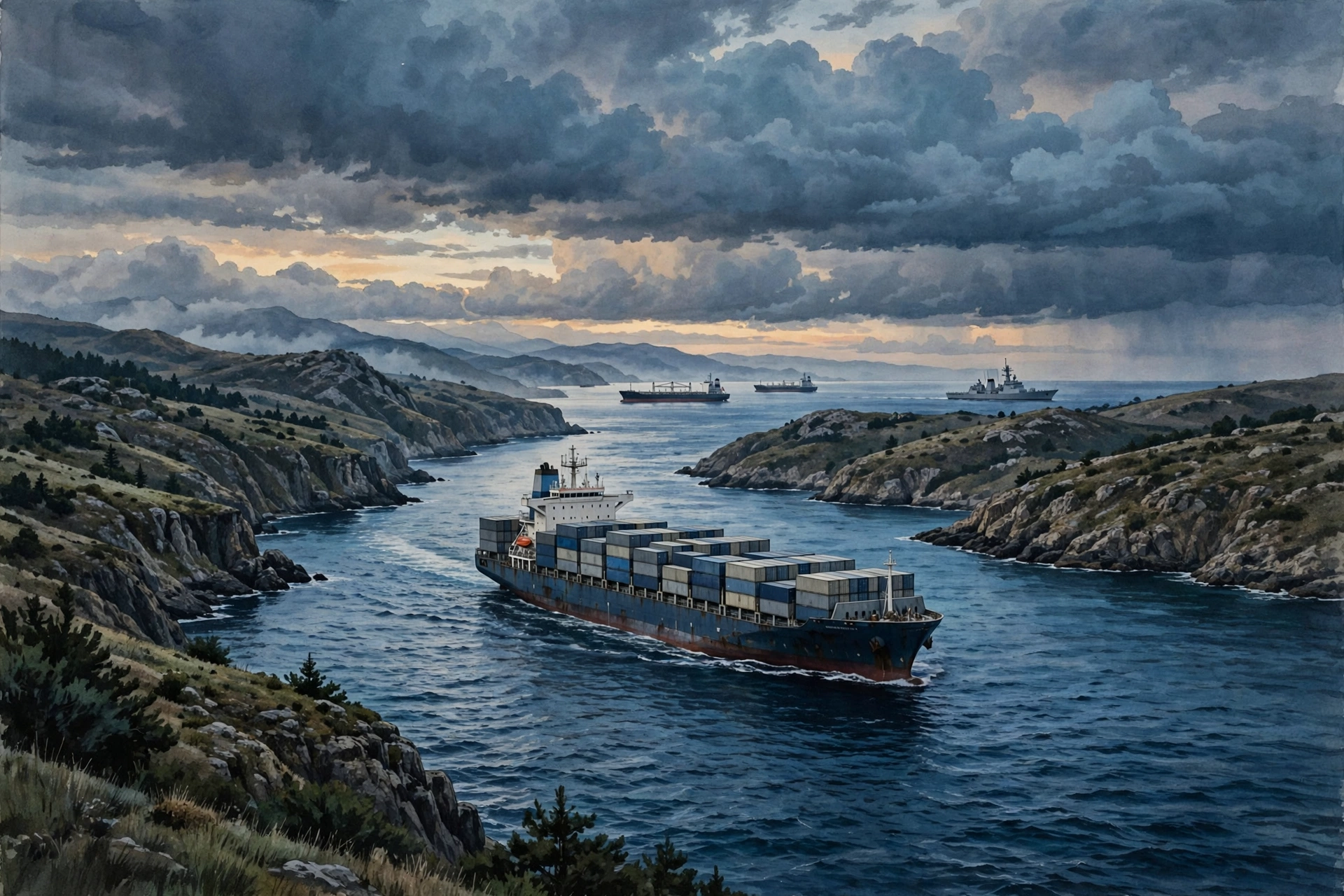
The United States disabled a St. Kitts-flagged cargo ship in the Gulf of Oman on Saturday, November 7. U.S. Central Command said the vessel ignored repeated warnings and tried to leave the area after visiting an Iranian port, as Washington's naval blockade of Iran entered another tense weekend with the Strait of Hormuz effectively closed.
What happened on Saturday?
Central Command said late Saturday that its forces disabled the commercial vessel after it attempted to breach the blockade. Reuters, reporting via Investing.com, said a U.S. military aircraft fired precision munitions at the ship's stern after forces asked the crew to evacuate the targeted areas. The Associated Press said U.S. forces have enforced the blockade for months in and around the Strait of Hormuz.
About 21 minutes after the U.S. action, at 20:56 GMT, Iran's Islamic Revolutionary Guard Corps announced that two oil tankers had struck mines and caught fire in the Strait of Hormuz. That claim is unconfirmed: the IRGC gave no vessel names, flags or ownership details, and no independent maritime tracking service has confirmed either ship's identity or location.
Why is this blowing up?
It was, according to multiple trackers of the crisis, the first day both sides announced disabling commercial vessels on the same calendar day in overlapping waters. One side's action is documented by Central Command and wire reporting. The other side's is, so far, a claim. Markets and shipping watchers are treating the combination seriously because the strait is not a side route — before the war, about one-fifth of the world's traded oil and liquefied natural gas passed through it, according to Reuters.
Traffic has collapsed since then. IMF PortWatch recorded just 1 transit on November 1 against a pre-crisis baseline of about 85 per day, and the strait remains listed as closed, with Brent crude settling at $98.32 in the last session before the weekend.
Key facts
- The ship: A St. Kitts-flagged cargo vessel, disabled in the Gulf of Oman on Saturday after repeated warnings, according to Central Command.
- The blockade tally: Central Command estimates the blockade has prevented Iran from exporting crude oil worth more than $25 billion as of November 7. CBS News reported 144 commercial vessels had been redirected through the end of October.
- The Iranian claim: Two tankers struck mines and caught fire on Saturday evening, according to the IRGC via Xinhua and TASS — unconfirmed, with no ships identified.
- The strait: At its narrowest the Strait of Hormuz is 21 nautical miles wide, and Iran declared it closed on October 26.
- The backdrop: On Friday, President Donald Trump confirmed new, limited U.S. strikes on Iranian air-defense systems near Qeshm Island, in the strait.
- The wider push: Central Command also announced a new task force, Iron Gate, aimed at weapons technology and illegal revenue moving over Iran's land borders and the Caspian Sea.
Why markets care on a closed weekend
Stock and oil markets are closed on Saturday, so there is no price reaction to read yet — and that is exactly why this story is building over the weekend. The last completed oil session left Brent just under $100, after a week in which crude fell more than 12% on hopes for Middle East diplomacy. A documented blockade enforcement, plus an unconfirmed report of burning tankers in the world's most important oil chokepoint, tests that diplomacy story before Monday's open.
Diplomacy has not stopped. Qatar has submitted a two-stage, 48-hour plan: the United States lifts its blockade and releases part of Iran's frozen assets on day one, Iran allows nuclear inspections, and the strait reopens on day two. Neither side had accepted it as of November 6, according to Axios.
October already saw the most attacks on commercial vessels in the strait since March, according to the Associated Press. Saturday adds a new element: simultaneous enforcement by both sides, announced within minutes of each other.
What's next
Watch three things before markets reopen. First, whether any independent source — a maritime authority, insurer or tracking service — identifies the two tankers Iran says hit mines. Second, whether Washington or Tehran comments further on the disabled cargo ship and the new Iron Gate task force. Third, whether Qatar's 48-hour plan gets any public response after a weekend that showed both sides still enforcing, in opposite directions, in the same narrow water.
Sources: Reuters and Associated Press reporting via EL7, House of Saud Daily Briefing, Straits Daily Brief, November 7, AXY News Global (CBS News and Reuters), Qatar 48-hour plan briefing
FAQ
What ship did the United States disable on November 7?
Central Command said its forces disabled a St. Kitts-flagged commercial cargo vessel in the Gulf of Oman after it ignored repeated warnings and tried to leave the area following a visit to an Iranian port.
Did two tankers really hit mines in the Strait of Hormuz?
Iran's Revolutionary Guard said two tankers struck mines and caught fire on Saturday evening, but it named no ships and no independent maritime service has confirmed the claim, so it remains unconfirmed.
How much oil trade does the Strait of Hormuz carry?
Before the war, about one-fifth of the world's traded oil and liquefied natural gas passed through the strait, according to Reuters. Traffic has since collapsed, with IMF PortWatch recording just 1 transit on November 1.
What is Qatar's plan to reopen the strait?
Qatar has proposed a two-stage, 48-hour plan: the United States lifts its blockade and releases part of Iran's frozen assets on day one, and Iran reopens the strait on day two. Neither side had accepted it as of November 6.